Are Neural Processing Units Essential? Benchmarking 45 TOPS NPUs
Advertisements
As hardware manufacturers race to integrate dedicated silicon for local AI workloads, evaluating 45 TOPS NPUs has become the central debate in modern personal computing. These specialized neural processors promise to run complex artificial intelligence models right on your laptop without relying on cloud servers.
Reaching this performance threshold allows devices to seamlessly execute real-time background tasks, generative prompts, and advanced privacy-focused processing with minimal battery drain. Offloading these heavy machine learning routines from the primary processor drastically improves overall system efficiency and responsiveness.
Whether you are a creator, professional, or everyday user, understanding these silicon benchmarks determines if upgrading your device is actually worth the investment. Let's benchmark these local AI accelerators to see if 45 TOPS truly delivers a game-changing performance leap.
The Rise of NPUs: A New Computing Paradigm
The integration of Neural Processing Units (NPUs) into mainstream laptops marks a significant evolution in computing architecture, moving beyond traditional CPU and GPU roles for AI workloads. This specialized hardware is designed to accelerate machine learning tasks with unparalleled efficiency, consuming less power than general-purpose processors.
As AI applications become more integral to daily computing, from advanced video conferencing features to sophisticated content creation tools, the demand for dedicated AI acceleration has surged. NPUs are answering this call by providing the computational muscle needed for these complex algorithms to run smoothly and responsively on-device.
This paradigm shift is not merely about speed; it's about enabling a new generation of intelligent features that were previously relegated to powerful servers or cloud infrastructure. Local AI processing promises enhanced privacy, reduced latency, and greater autonomy for personal devices.
What Defines a Neural Processing Unit?
An NPU is a specialized microprocessor optimized for machine learning algorithms, particularly neural networks. Unlike CPUs, which are designed for general-purpose computing, or GPUs, which excel at parallel processing for graphics and some AI, NPUs are purpose-built for the specific mathematical operations common in AI, such as matrix multiplication and convolution.
This specialization allows NPUs to perform AI tasks with far greater energy efficiency and speed than their general-purpose counterparts. Their architecture often includes dedicated memory and instruction sets tailored for AI workloads, resulting in a significant performance boost for on-device AI applications.
The efficiency of NPUs is measured in TOPS (Trillions of Operations Per Second), a metric that quantifies their raw processing power for AI calculations. Higher TOPS ratings generally indicate more capable NPUs, capable of handling more complex and demanding AI models locally.
Benchmarking 45 TOPS: The New Performance Threshold
The 45 TOPS benchmark for NPUs in 2026 laptops is emerging as a critical performance indicator, signifying a new era of on-device AI capabilities. This threshold is not arbitrary; it represents the computational power needed to efficiently run a wide range of demanding AI models locally, without relying on cloud services.
Achieving 45 TOPS means a laptop's NPU can handle tasks such as real-time language translation, advanced image and video editing with AI effects, sophisticated voice assistants, and complex generative AI applications directly on the device. This level of performance unlocks a new tier of user experience and productivity.
Industry leaders are actively pursuing this benchmark, recognizing its importance for mainstream adoption of AI-powered features. Laptops reaching or exceeding 45 TOPS will be positioned as true AI PCs, capable of delivering a seamless and powerful AI experience.
When we discuss Neural Processing Units Essential, the 45 TOPS figure becomes a central point of discussion. This specific performance metric is becoming the de facto standard for what constitutes a capable AI PC, ensuring robust performance for the next generation of software.
Real-World Impact of 45 TOPS NPUs
Enhanced Privacy: Processing AI tasks locally keeps sensitive data on the device, reducing privacy concerns associated with cloud processing.
Reduced Latency: On-device processing eliminates network delays, leading to instant responses for AI-powered features.
Offline Capabilities: AI applications can function fully without an internet connection, crucial for productivity on the go.
Improved Battery Life: NPUs are significantly more power-efficient for AI tasks than CPUs or GPUs, extending laptop battery life.
The practical benefits extend across various user scenarios, from professional content creators requiring fast AI-driven edits to everyday users benefiting from more intelligent and responsive operating system features. The 45 TOPS NPU empowers a device to be truly smart and self-sufficient.
Local AI Tasks: The Driving Force for NPU Adoption
The growing demand for local AI tasks is the primary catalyst for the widespread adoption of powerful NPUs in laptops. Users and developers alike are recognizing the inherent advantages of processing artificial intelligence directly on the device, moving away from a purely cloud-centric model.
This shift is driven by several factors, including the need for immediate results, enhanced data security, and the ability to operate AI applications reliably even without an internet connection. Local AI processing transforms how we interact with our devices, making them more personal and powerful.
The ability to run complex AI models locally opens up new possibilities for innovation in software development, allowing for more immersive and responsive applications that are deeply integrated with the user's personal computing environment.
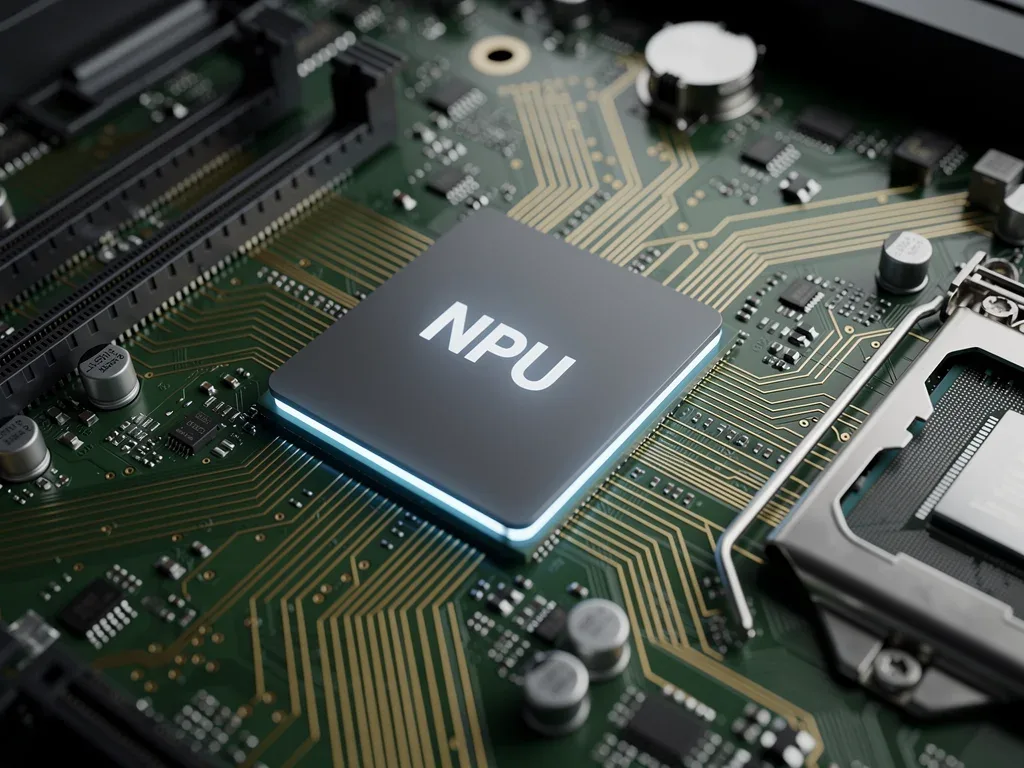
Key Local AI Applications Benefiting from 45 TOPS NPUs
Several key applications stand to gain significantly from the increased processing power offered by 45 TOPS NPUs. These range from productivity tools to creative suites, fundamentally changing how users interact with their software and hardware.
For instance, advanced video conferencing tools can leverage NPUs for real-time background blurring, noise suppression, and even eye-contact correction, all executed seamlessly on the device. This enhances communication quality without straining network resources or offloading personal data.
Creative professionals will experience faster AI-driven content generation, upscaling, and style transfer in applications like Adobe Photoshop and Premiere Pro. Developers can also create more sophisticated on-device AI assistants and intelligent automation tools that are both powerful and privacy-preserving.
These applications underscore why Neural Processing Units Essential is not just a technical discussion but a practical one, impacting daily workflows and creative output.
Major Players and Their NPU Strategies for 2026
The race to integrate high-performance NPUs into laptops is heating up, with major silicon manufacturers like Intel, AMD, and Qualcomm leading the charge. Each company is developing its own NPU architecture and ecosystem, aiming to dominate the emerging AI PC market by 2026.
Intel, with its Core Ultra processors featuring built-in NPUs (Neural Processing Units), is heavily investing in AI acceleration across its product lines. Their strategy focuses on a holistic approach, integrating AI capabilities directly into the CPU package to optimize performance and efficiency for a wide array of AI tasks.
AMD is also making significant strides with its Ryzen AI engines, which are designed to deliver robust AI performance for consumer and commercial laptops. Their focus is on providing a balanced platform that combines strong CPU and GPU performance with dedicated AI acceleration to cater to diverse computing needs.
Qualcomm, a dominant force in mobile processors, is extending its expertise in power-efficient AI to the laptop space with its Snapdragon X Elite and Plus platforms. These chips are engineered from the ground up for AI workloads, promising exceptional performance per watt, which is crucial for thin and light laptops.
Intel, AMD, and Qualcomm's NPU Roadmaps
Intel's roadmap for its NPU capabilities includes continuous improvements in TOPS performance and expanded software ecosystem support. They aim to make AI processing a standard feature across all tiers of their laptop processors, ensuring broad accessibility to AI-powered experiences.
AMD is focusing on scaling its Ryzen AI technology to higher performance levels, targeting the 45 TOPS benchmark and beyond for its future laptop platforms. Their strategy involves tight integration with Microsoft's AI initiatives and broader software partnerships to optimize AI workloads.
Qualcomm's approach leverages its Arm-based architecture to deliver industry-leading efficiency and performance for AI tasks. Their future NPUs are expected to push the boundaries of what's possible for on-device AI in ultra-portable form factors, setting a high bar for competitors.
These strategic investments by key players highlight the industry's collective belief that Neural Processing Units Essential is not just a trend but a fundamental shift in computing.
The Software Ecosystem: Enabling NPU Potential
While powerful NPUs are crucial, their true potential can only be unlocked through a robust and optimized software ecosystem. This includes operating system integration, developer tools, and applications that are specifically designed to leverage NPU capabilities efficiently.
Microsoft plays a pivotal role with Windows, actively developing AI features and APIs that allow software developers to harness the power of NPUs. This integration ensures that AI acceleration is seamlessly available across a wide range of applications, from system utilities to third-party software.
Developer tools and frameworks, such as OpenVINO, ONNX Runtime, and various AI SDKs provided by chip manufacturers, are essential for enabling developers to optimize their AI models for NPU hardware. These tools abstract away much of the low-level complexity, making it easier to deploy AI applications that run efficiently on NPUs.
The collaboration between hardware manufacturers, operating system providers, and software developers is key to creating a rich and functional AI PC experience. Without optimized software, even the most powerful NPU would struggle to deliver its full potential.
Optimizing Applications for NPU Performance
Framework Support: Ensure AI models are built using frameworks like PyTorch or TensorFlow that can export to NPU-compatible formats.
Quantization: Optimize models for lower precision (e.g., INT8) to improve NPU inference speed and efficiency.
API Integration: Utilize manufacturer-specific NPU APIs or standardized APIs (like DirectML) for direct hardware access.
Profiling and Tuning: Use available tools to profile NPU performance and identify bottlenecks, then tune models accordingly.
The effort to optimize applications for NPU performance is a continuous process, driven by advancements in both hardware and software. This ongoing development ensures that the benefits of powerful NPUs are fully realized by end-users.
Challenges and Considerations for Widespread NPU Adoption
Despite the promising future of NPUs, several challenges and considerations need to be addressed for their widespread adoption and effective utilization in laptops. These include standardization, developer education, and managing consumer expectations.
One significant challenge is the lack of a universal standard for NPU programming and benchmarking. While TOPS provides a raw performance metric, real-world performance can vary greatly depending on the NPU's architecture, software optimization, and the specific AI model being run. This makes direct comparisons difficult for consumers and developers.
Educating developers on how to effectively utilize NPUs is another hurdle. Many developers are accustomed to CPU and GPU programming paradigms, and adapting to NPU-specific optimizations requires new knowledge and tools. Comprehensive documentation and training resources are essential.
Finally, managing consumer expectations about what an "AI PC" can do is crucial. While NPUs enable powerful local AI, they are not a magic bullet for all AI tasks, and certain complex models will still require cloud resources. Clear communication about capabilities is vital.
Future Outlook: Are NPUs Truly Essential?
The question Neural Processing Units Essential is becoming less of a debate and more of a foregone conclusion for the future of personal computing. As AI becomes deeply embedded in operating systems and applications, dedicated hardware acceleration will be indispensable.
The efficiency gains, privacy benefits, and enhanced user experiences offered by NPUs are too significant to ignore. While initial adoption may focus on specific use cases, the long-term trajectory points towards NPUs becoming as fundamental to laptops as CPUs and GPUs are today.
The market is clearly moving towards a future where NPUs are not just a feature, but a core component defining the capabilities of the next generation of personal computers, especially as the 45 TOPS benchmark becomes commonplace.
Key Point | Brief Description |
|---|---|
45 TOPS NPU Significance | New benchmark for efficient on-device AI, enabling complex local tasks. |
Local AI Benefits | Enhanced privacy, reduced latency, offline capability, better battery life. |
Industry Leaders | Intel, AMD, and Qualcomm driving NPU innovation and integration. |
Software Ecosystem | OS integration, developer tools, and optimized apps crucial for NPU potential. |
Frequently Asked Questions About NPUs
What exactly is an NPU in a laptop?▼
An NPU, or Neural Processing Unit, is a specialized hardware component within a laptop designed to accelerate artificial intelligence and machine learning tasks. Unlike CPUs or GPUs, NPUs are optimized for the specific mathematical operations involved in neural networks, making them highly efficient for on-device AI applications with lower power consumption.
Why is 45 TOPS considered an important benchmark for 2026 laptops?▼
The 45 TOPS (Trillions of Operations Per Second) benchmark signifies a critical performance level for NPUs. It represents the computational power needed to efficiently run a wide range of complex AI models locally, such as real-time language translation, advanced image editing, and generative AI, without relying on cloud services. This enables a superior local AI experience.
What are the main benefits of local AI processing enabled by NPUs?▼
Local AI processing offers several key advantages. It enhances user privacy by keeping data on the device, reduces latency for instant responses, allows AI applications to function offline, and improves battery life due to the NPU's power efficiency. These benefits contribute to a more secure, responsive, and versatile computing experience.
Which companies are leading the development of NPUs for laptops?▼
Major silicon manufacturers like Intel, AMD, and Qualcomm are at the forefront of NPU development for laptops. Each company is integrating its own NPU architecture into its processors (e.g., Intel Core Ultra, AMD Ryzen AI, Qualcomm Snapdragon X Elite) to deliver high-performance, power-efficient AI capabilities for the next generation of AI PCs.
Will NPUs become essential for all laptops in the future?▼
The trend indicates that NPUs are rapidly becoming an essential component for laptops, especially as AI features become more integrated into operating systems and everyday applications. The efficiency, privacy, and performance benefits they offer for local AI tasks suggest they will be as fundamental as CPUs and GPUs in defining the capabilities of future personal computers.
Looking Ahead
The ongoing developments surrounding Neural Processing Units Essential underscore a significant shift in personal computing. The industry is clearly moving towards a future where dedicated AI hardware is not just a luxury but a fundamental necessity for delivering advanced, efficient, and private AI experiences directly on user devices.
As manufacturers continue to innovate and software ecosystems evolve, the 45 TOPS benchmark will likely become a baseline for what consumers expect from an AI-capable laptop. This evolution promises more intelligent, responsive, and personalized computing, fundamentally altering how we interact with our technology in the years to come.