7 Advanced Battery Tweaks for Modern Smartphones in 2026
Advertisements
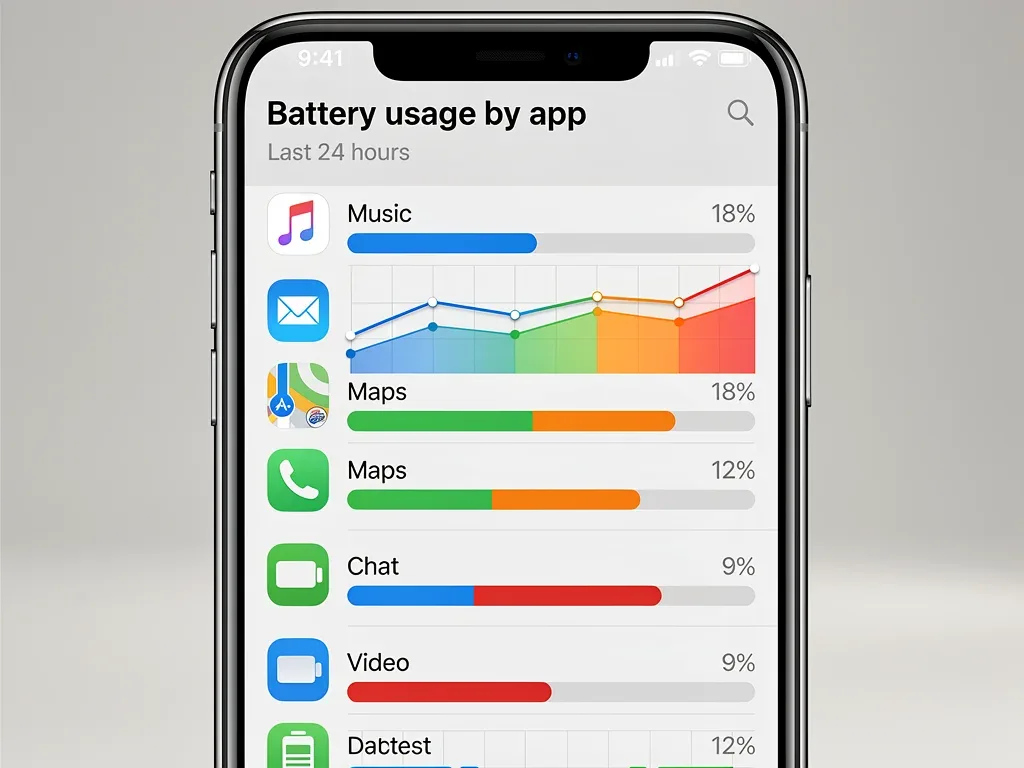
Is your phone battery draining long before the day ends despite owning a modern device? Applying targeted Advanced Battery Tweaks can reclaim up to 30% of your daily charge by silencing aggressive background operations that drain resources unnoticed.
While power-saving modes offer quick fixes, deeper system optimizations target the hidden processes truly draining your capacity. Fine-tuning telemetry settings, managing refresh rates, and controlling app activity allow you to maximize screen-on time without sacrificing performance.
Below, we uncover seven expert-tested mobile optimization techniques designed to extend operating health in 2026. Here is your step-by-step guide to mastering device longevity and eliminating low-battery anxiety for good.
Understanding Background Processes and Battery Drain in 2026
Background processes are a primary culprit behind rapid battery depletion on contemporary smartphones. These operations, ranging from app updates to location services, consume significant power even when the device appears idle.
In 2026, with increasingly complex applications and always-on features, effective management of these processes has become more critical than ever. Users frequently overlook the cumulative impact of these hidden activities on their device’s overall energy consumption.
Identifying and addressing these power-hungry background tasks is the first step towards achieving substantial battery life improvements. This proactive approach ensures your smartphone performs optimally throughout the day.
The Evolution of Background Activity
Smartphone operating systems have continuously evolved, introducing more sophisticated multitasking capabilities. While beneficial for user experience, this often comes at the cost of increased background power draw.
Applications now leverage cloud synchronization, real-time notifications, and continuous data fetching, which constantly engage the device's processor and radio. These activities, though seemingly minor individually, collectively impact battery performance significantly.
Users must adapt their management strategies to these evolving technical landscapes to maintain optimal battery health. Understanding how these features operate is key to effective optimization.
Impact of Unmanaged Background Processes
Reduced daily uptime, requiring frequent recharges.
Accelerated battery degradation over the device’s lifespan.
Decreased overall device performance due to resource contention.
Unmanaged background processes lead to a frustrating user experience, marked by constant anxiety over battery levels. This directly affects productivity and the overall utility of a modern smartphone.
Furthermore, the continuous drain can contribute to device overheating, which has its own set of long-term implications for hardware integrity. Addressing these issues is paramount for any smartphone user.
Tweak 1: Intelligent App Standby and Doze Mode Optimization
Optimizing Intelligent App Standby and Doze Mode is crucial for extending battery life, especially on Android devices. These features automatically restrict background app activity when the phone is not in active use, but they can be further fine-tuned.
Users often rely on default settings, missing opportunities to enhance these modes for greater power savings. Adjusting system-level parameters can significantly improve their effectiveness in managing background processes.
This tweak focuses on ensuring that only essential applications are exempt from these aggressive power-saving measures, thereby minimizing unnecessary background drain throughout the day.
Configuring Aggressive Doze Parameters
Accessing developer options allows for more granular control over Doze mode's activation thresholds and duration. This advanced configuration ensures the device enters a deep sleep state more rapidly and stays there longer.
By shortening the time before Doze activates and lengthening its sleep cycles, non-critical background tasks are effectively paused, leading to substantial energy conservation. This requires careful consideration to avoid disrupting essential app functionality.
This approach is a cornerstone of 7 Advanced Background Process Tweaks, providing a foundation for subsequent optimizations.
Leveraging Third-Party Doze Enhancers
Applications like Greenify or Naptime can further fine-tune Doze and App Standby.
These tools offer additional settings to force apps into deeper sleep states.
They often provide a user-friendly interface for managing complex system parameters.
While native Doze mode is effective, third-party applications can push its capabilities further. These tools are particularly useful for devices with less aggressive default power management.
It is important to select reputable applications and understand their permissions before installation. Incorrect usage could potentially interfere with critical system functions or desired app behaviors.
Tweak 2: Restricting Network Activity for Background Apps
Controlling when and how background applications access network data is a powerful battery-saving strategy. Many apps continuously sync data, even when not actively in use, consuming both battery and data.
Modern smartphone operating systems provide options to limit or entirely disable background network access for specific applications. This prevents apps from waking up the device to fetch updates or send telemetry.
Implementing this tweak judiciously ensures that only applications requiring real-time updates are permitted unrestricted background network access, conserving significant power.
Disabling Background Data for Non-Essential Apps
Navigate to your phone’s settings, typically under 'Apps & notifications' or 'Data usage', to manage individual app permissions. Here, you can toggle off 'Background data' or 'Unrestricted data usage' for apps that don't need constant internet access.
Consider social media, news feeds, and gaming applications as prime candidates for this restriction. They often consume substantial power by continuously refreshing content in the background.
This simple yet effective step is a key component of 7 Advanced Background Process Tweaks, directly impacting network-related battery drain.
Utilizing Data Saver Modes Effectively
Activate system-wide Data Saver modes to automatically restrict background data.
Whitelist essential apps that require constant network connectivity.
Monitor data usage to identify apps with excessive background network activity.
Data Saver modes, available on both Android and iOS, provide a blanket solution for reducing background network consumption. These modes intelligently manage which apps can use data when not in the foreground.
While convenient, remember to review the exceptions list to ensure crucial applications like messaging services or email clients receive their necessary data. This balance is vital for a seamless user experience.
Tweak 3: Advanced Location Services Management
Location services are notorious battery consumers, as many applications constantly ping for your geographical position. Fine-tuning these settings is critical for substantial battery gains without sacrificing essential functionality.
Modern smartphones offer granular control over location access, allowing users to specify when and how apps can use this sensitive data. Default settings often grant more access than necessary, leading to undue power drain.
This tweak involves a systematic review of all applications with location permissions, adjusting them to 'While using the app' or 'Never' for most non-essential services.
Auditing Location Permissions per App
Go through your app list and check each application's location permissions. For weather apps, map services, or ride-sharing apps, 'While using the app' is often sufficient. Other apps, like games or social media, may not need location access at all.
Even if an app needs location, ensure it's not set to 'Always Allow' unless absolutely critical, such as for emergency services or specific fitness trackers. Every unnecessary background location request adds to battery drain.
This detailed audit is a fundamental part of 7 Advanced Background Process Tweaks, offering direct control over a major power hog.
Disabling Wi-Fi and Bluetooth Scanning
Turn off Wi-Fi scanning for improved location accuracy in settings.
Disable Bluetooth scanning for improved location accuracy in settings.
These features, while enhancing location, constantly search for networks/devices.
Many devices have options to improve location accuracy by scanning for nearby Wi-Fi networks and Bluetooth devices, even when Wi-Fi and Bluetooth are otherwise off. This constant scanning consumes noticeable power.
Disabling these scanning features will not affect your ability to connect to Wi-Fi or Bluetooth manually, but it will prevent the phone from constantly searching in the background. This small adjustment can yield surprising battery benefits.
Tweak 4: Optimizing Background App Refresh (iOS) / Background Activity Control (Android)
Both iOS and Android provide mechanisms to control how applications refresh their content in the background. Mastering these settings is paramount for preventing apps from continually consuming resources when not actively in use.
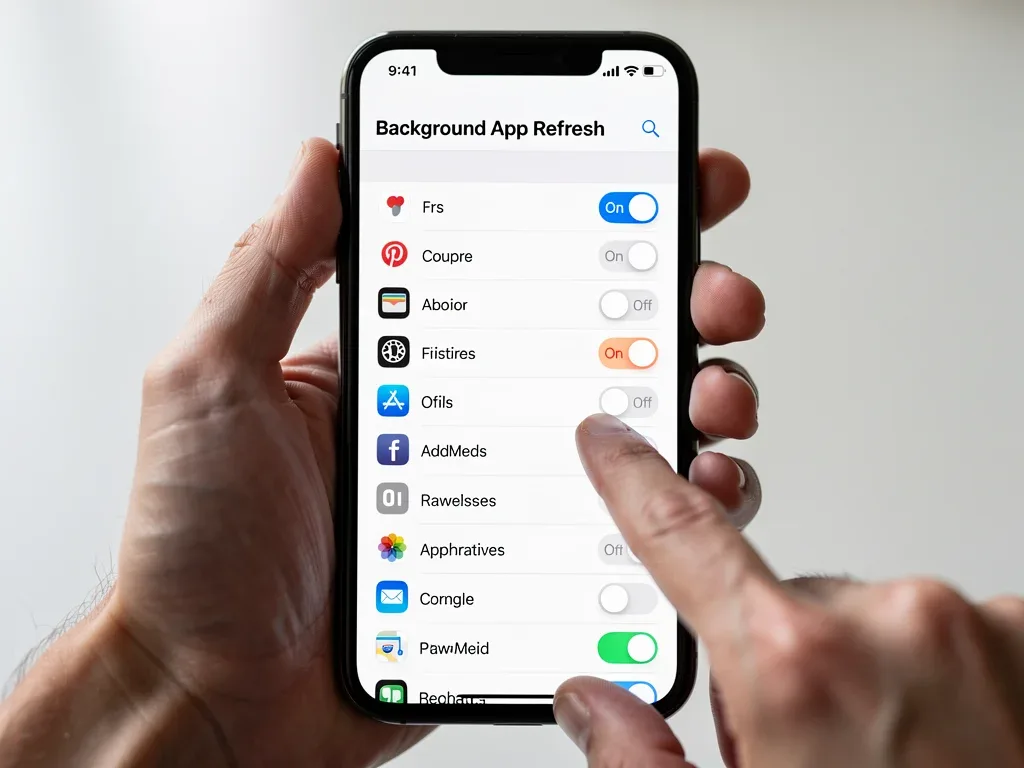
On iOS, 'Background App Refresh' allows apps to update content over Wi-Fi or cellular in the background. On Android, similar controls exist under individual app settings for background activity.
Careful management of these features ensures that only truly essential applications are permitted to refresh in the background, significantly reducing overall battery consumption.
Strategic Disabling on iOS
For iOS users, navigating to Settings > General > Background App Refresh offers a comprehensive list of applications. Disabling this feature entirely for non-essential apps can provide immediate and noticeable battery improvements.
Consider which apps genuinely need to be up-to-date at all times, such as messaging clients or email. For others, allowing them to refresh only when opened is a smart strategy to conserve power.
This targeted approach is integral to implementing 7 Advanced Background Process Tweaks on Apple devices.
Granular Control on Android
Access individual app settings to restrict background activity.
Look for options like 'Restrict background usage' or 'Optimize battery usage' for specific apps.
Utilize adaptive battery features that learn app usage patterns.
Android's approach often provides more granular control over background activity. Users can dive into each app's battery settings to force stop, restrict background usage, or allow the system's adaptive battery features to manage it.
The 'Adaptive Battery' feature, introduced in recent Android versions, uses machine learning to prioritize battery for apps you use most. Ensure this feature is enabled and allowed to learn your usage patterns for optimal results.
Tweak 5: Minimizing Push Notifications and Synchronizations
Excessive push notifications and continuous data synchronizations are significant contributors to battery drain. Each notification wakes up the screen and often triggers background processes, while constant syncs keep radios active.
While notifications are essential for communication, many apps send non-critical alerts that provide little value but consume considerable power. Similarly, continuous synchronization for non-urgent data can be wasteful.
This tweak focuses on intelligent management of these features, ensuring that only truly important alerts and data syncs are permitted, thereby reducing constant device activity.
Selective Notification Management
Review your notification settings for every installed application. Disable notifications for apps that provide non-essential updates or advertisements. Many apps offer granular control over notification types, allowing you to mute less important alerts.
Consider using 'Do Not Disturb' modes or scheduling notification pauses during specific times to prevent constant interruptions. Each notification, however small, contributes to the overall battery consumption.
This strategic reduction is a core element of 7 Advanced Background Process Tweaks, leading to a quieter and more efficient device.
Optimizing Sync Frequencies
Adjust email, calendar, and cloud storage sync intervals to manual or less frequent.
Disable automatic media uploads to cloud services when on mobile data.
Review accounts set for automatic synchronization in system settings.
Many services, including email, contacts, and cloud storage, are set to synchronize data continuously or at very short intervals. Adjusting these sync frequencies can significantly reduce background radio activity.
For non-critical accounts, consider setting sync to manual or extending the interval to every few hours. This ensures data is updated but without the constant power drain of continuous synchronization.
Tweak 6: Utilizing Power-Saving Modes and Adaptive Battery Features
Modern smartphones come equipped with built-in power-saving modes and adaptive battery features designed to intelligently manage power consumption. Activating and customizing these can provide a substantial boost to battery life.
These modes typically restrict background app activity, reduce screen brightness, limit visual effects, and throttle CPU performance. While they might slightly impact performance, the battery gains are often worth it.
Understanding how to best leverage these integrated features is crucial for any user looking to implement 7 Advanced Background Process Tweaks effectively.
Customizing Power Saving Profiles
Instead of relying solely on the default 'Low Power Mode' or 'Battery Saver', explore the customization options. Many devices allow you to tailor what restrictions are applied when power-saving is active.
You might choose to keep certain visual effects or higher refresh rates while still restricting background data and CPU usage. This allows for a balance between performance and battery conservation that suits your needs.
Setting up automated activation based on battery percentage can also ensure these modes kick in when most needed, without constant manual intervention.
Adaptive Battery and App Learning
Ensure Adaptive Battery (Android) or similar features (iOS) are enabled.
Allow the system to learn your app usage patterns over time.
Avoid frequently force-closing apps, as this can hinder adaptive learning.
Adaptive Battery on Android and similar intelligent power management systems on iOS learn your usage habits to optimize battery consumption. They predict which apps you'll use and when, intelligently putting others to sleep.
For these features to work effectively, it's important to use your phone naturally and allow the system to gather data. Force-closing apps frequently can interfere with this learning process, potentially leading to less optimal battery management.
Tweak 7: Regular App Audits and System Updates
The digital landscape is constantly evolving, with new apps and system updates frequently altering power consumption profiles. Regular app audits and timely system updates are therefore essential for maintaining optimal battery health.
Outdated applications can contain inefficiencies or bugs that lead to excessive background battery drain. Similarly, system updates often include critical power management improvements and optimizations.
This final tweak emphasizes a proactive maintenance approach, ensuring your smartphone’s software is always running at its most efficient, directly contributing to extending battery life.
Performing Periodic App Reviews
Dedicate time each month to review your installed applications. Uninstall apps you no longer use, as even dormant apps can sometimes activate background processes or consume storage and resources.
Check app permissions for all remaining applications, revoking any unnecessary access to location, camera, microphone, or background data. Many apps request broad permissions upon installation that are not critical for their function.
This diligent review is a vital part of 7 Advanced Background Process Tweaks, ensuring your device remains lean and efficient.
Staying Current with OS and App Updates
Install operating system updates promptly for battery optimizations.
Keep all applications updated to their latest versions.
Read update changelogs for mentions of power efficiency improvements.
Operating system updates frequently include crucial bug fixes and power management enhancements that can significantly improve battery life. Delaying these updates means missing out on potential optimizations.
Similarly, app developers constantly release updates that address performance issues and improve efficiency. Ensuring all your apps are up-to-date helps prevent them from unnecessarily draining power in the background.
Key Tweak | Benefit for Battery Life |
|---|---|
Doze Mode Optimization | Deeper sleep states, reduced idle drain. |
Network Activity Restriction | Prevents unnecessary background data usage. |
Location Services Audit | Minimizes constant GPS and network scanning. |
Background App Refresh Control | Stops apps from constantly updating in the background. |
Frequently Asked Questions About Battery Optimization
Can these advanced battery tweaks truly reclaim 30% battery life?▼
Yes, implementing all 7 Advanced Background Process Tweaks can collectively yield significant improvements. The exact percentage varies by device and usage, but a 30% gain is achievable by systematically addressing background drain. These tweaks target core areas of power consumption.
Will these tweaks affect my smartphone's performance or app functionality?▼
Some tweaks, like restricting background data or refresh, might delay non-critical notifications or content updates. However, essential app functionality should remain intact if you whitelist important services. The goal is a balance between battery life and usability, which these advanced battery tweaks provide.
Are these tweaks safe to apply to any modern smartphone?▼
Yes, the described tweaks are generally safe as they utilize built-in operating system features. Always exercise caution when adjusting developer options or using third-party tools. Reversing changes is usually straightforward if an issue arises, ensuring these advanced battery tweaks are manageable.
How often should I review and adjust these battery optimization settings?▼
It's advisable to review your settings periodically, perhaps quarterly, or after major OS updates or when installing many new apps. New app installations often default to battery-intensive settings, making regular audits crucial for maintaining the benefits of these advanced battery tweaks.
Do these tweaks work equally well on both Android and iOS devices?▼
While the underlying principles are similar, the specific implementation steps differ between Android and iOS. This article provides guidance applicable to both platforms. Users should adapt the general advice to their specific operating system's interface and features for optimal results from these advanced battery tweaks.
Looking Ahead: Sustaining Smartphone Battery Health
The continuous pursuit of enhanced smartphone battery life through 7 Advanced Background Process Tweaks remains a critical objective for users and manufacturers alike. These strategies offer a tangible path to extending device longevity and improving daily usability.
As smartphone technology evolves, new challenges and opportunities for power optimization will emerge. Users are encouraged to stay informed about operating system updates and new applications that promise further efficiencies, maintaining a proactive stance on device management.
Ultimately, a mindful approach to app usage, system settings, and regular maintenance will ensure that modern smartphones deliver their full potential, free from the constraints of rapid battery depletion.