Boost Your FICO Score by 45 Points in 90 Days Using Credit Line Rescaling
Advertisements
Optimizing your credit profile does not always require paying off thousands of dollars in revolving debt. Smart financial moves like strategic credit line rescaling allow you to instantly lower your utilization ratio across individual accounts, giving your FICO Score an immediate upward nudge.
By shifting underutilized credit limits from secondary accounts to your high-usage cards, you optimize the balance-to-limit ratio reported to major bureaus without opening new accounts. This targeted reallocation improves your credit evaluation profile while bypassing hard inquiries that temporarily dip your rating.
Executing this strategy alongside timely statement payments can deliver up to a 45-point rating jump in as few as 90 days. Here is a step-by-step guide to requesting credit reallocation from lenders and maximizing your credit standing fast.
Understanding credit line rescaling fundamentals
The concept of credit line rescaling involves strategically managing your available credit and outstanding balances to optimize your credit utilization ratio. This often overlooked strategy can significantly impact your FICO score within a relatively short period, making it a powerful tool for financial improvement.
By understanding the core mechanics of how credit bureaus assess your credit habits, individuals can implement targeted actions to rapidly enhance their credit profile. The focus here is on maximizing the positive aspects of your credit report while minimizing detrimental factors, specifically credit utilization.
This approach moves beyond simply paying bills on time, delving into the nuanced interplay between your credit limits and the amounts you actually owe. It is a proactive method for those serious about seeing tangible results in their FICO score.
The mechanism behind rapid FICO score improvements
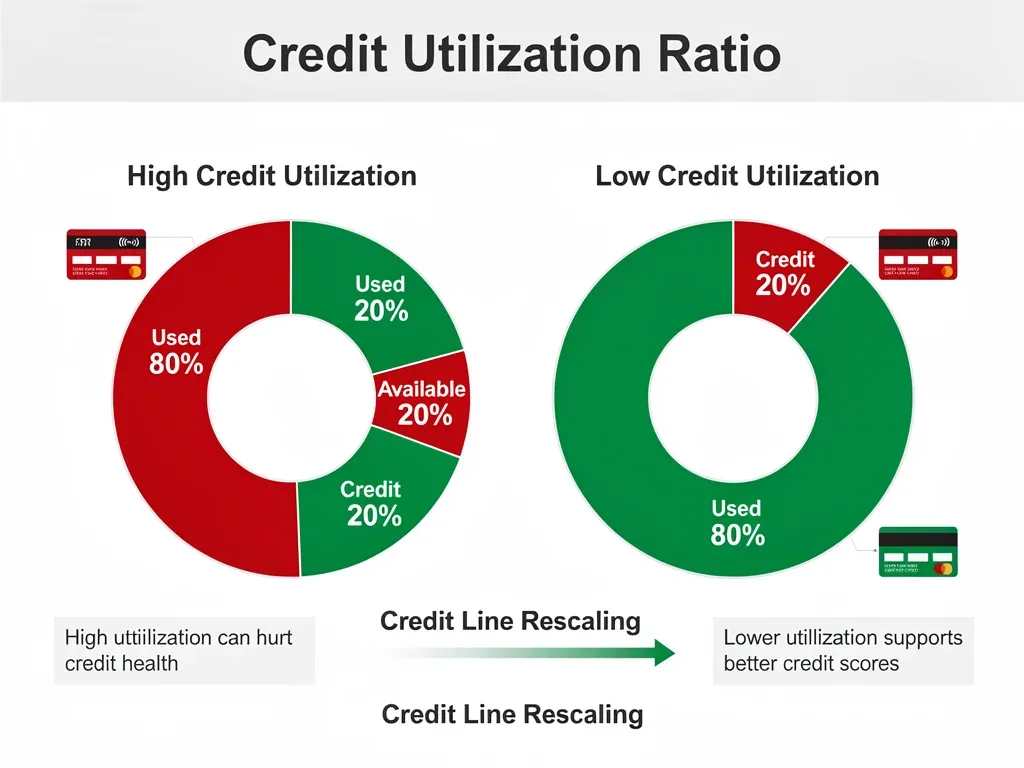
To Boost Your FICO Score, one must first grasp the critical role of credit utilization. This ratio, representing the amount of credit you are using compared to your total available credit, accounts for a substantial portion of your FICO score.
Lowering this ratio signals to lenders that you are not over-reliant on credit, indicating responsible financial behavior. By strategically adjusting your credit lines or paying down balances, you can dramatically improve this metric, leading to quick score increases.
The 90-day timeframe is achievable because FICO scores are dynamic, reacting relatively quickly to changes in credit utilization. Consistent, deliberate actions over this period can yield the desired 45-point boost, as reported by financial experts.
Credit utilization and its impact
Credit utilization is arguably one of the most impactful factors on your FICO score, often second only to payment history. Maintaining a low utilization rate, ideally below 30%, is consistently recommended by financial advisors.
When you actively work to reduce your reported balances relative to your credit limits, credit bureaus recognize this positive shift. This positive recognition translates directly into a higher FICO score, sometimes with remarkable speed.
The key is not just paying down debt, but understanding how and when balances are reported to credit bureaus, allowing for strategic timing of payments to reflect lower utilization.
Payment Timing: Ensure payments are made before the statement closing date to report lower balances.
Balance Reduction: Focus on significantly paying down high-interest credit card balances.
Credit Limit Increases: Requesting a credit limit increase without increasing spending can lower your utilization.
The strategic application of these principles is what allows individuals to Boost Your FICO Score.
Strategic approaches to credit line optimization
Optimizing your credit lines requires a multi-faceted approach, combining proactive communication with creditors and disciplined spending habits. This strategy aims to create a healthier credit profile that lenders view favorably, directly contributing to a higher FICO score.
One effective method involves requesting credit limit increases on existing accounts, provided you do not increase your spending. This action immediately lowers your utilization ratio, assuming your balances remain constant.
Another approach is to open a new credit line, carefully considering the impact on your average account age. While a new account might temporarily lower your average age, the added available credit can significantly reduce your overall utilization, especially if managed responsibly.
Requesting credit limit increases
Contacting your credit card issuers to request a credit limit increase can be a straightforward way to improve your credit utilization. It is crucial to ensure that this request does not trigger a hard inquiry if you are trying to avoid short-term score dips.
Many issuers offer soft inquiries for limit increases, especially if you have a good payment history with them. Explain your goal is to improve your credit score and not to increase spending, emphasizing responsible financial management.
Always verify with your issuer whether the request will result in a hard or soft inquiry before proceeding, as hard inquiries can cause a minor, temporary drop in your score.
Check Eligibility: Ensure you meet the issuer's criteria for a limit increase.
Maintain Good Standing: A history of on-time payments and low utilization with that specific card helps.
Specify Intent: Clearly state your goal is to improve credit utilization, not to spend more.
These actions are pivotal for those looking to Boost Your FICO Score.
The role of debt consolidation and balance transfers
Debt consolidation and balance transfers can be powerful tools within a credit line rescaling strategy, especially for managing multiple high-interest debts. By combining several balances into one, you can simplify payments and potentially secure a lower interest rate, freeing up funds to pay down principal faster.
A balance transfer to a new card with a 0% introductory APR can provide a crucial window to significantly reduce debt without accruing additional interest. This strategic move directly impacts your credit utilization on the original cards, lowering reported balances.
However, it is essential to approach these options cautiously, understanding any associated fees and the terms of the new credit agreement. Mismanagement can lead to further debt accumulation rather than improvement, negating the efforts to Boost Your FICO Score.
Consolidating high-interest debt
Consolidating debt into a personal loan can offer a fixed payment schedule and a clear path to becoming debt-free. This method can significantly reduce the number of individual credit lines with high utilization, thus improving your overall credit profile.
When considering a consolidation loan, compare interest rates and repayment terms carefully. The goal is to reduce your monthly financial burden and accelerate debt repayment, rather than just shifting the problem.
Successful debt consolidation can lead to a noticeable improvement in your credit score as your utilization ratio decreases across multiple accounts, helping to Boost Your FICO Score.
Balance transfers, while offering attractive introductory rates, require strict discipline. The objective is to pay off the transferred balance entirely before the promotional period ends, avoiding high deferred interest rates.
Monitoring and adjusting your credit strategy
Regularly monitoring your credit report and scores is non-negotiable when aiming to Boost Your FICO Score. Credit reports can contain errors, and vigilance ensures that your efforts are accurately reflected and not undermined by inaccuracies.
Free credit reports are available annually from each of the three major credit bureaus: Equifax, Experian, and TransUnion. Utilizing these resources allows you to track your progress and identify any discrepancies that need addressing.
Adjusting your strategy based on your monitoring results is crucial. If certain actions are not yielding the expected improvements, re-evaluate your approach and consider alternative tactics. Credit improvement is an ongoing process that benefits from flexibility and informed decision-making.
Regular credit report checks
Checking your credit report regularly allows you to identify any unauthorized activity, potential fraud, or reporting errors promptly. Disputing inaccuracies can be a lengthy process, so early detection is key to maintaining an accurate credit profile.
Understanding what information is reported by your creditors and how it impacts your score empowers you to make smarter financial decisions. This proactive approach is fundamental for anyone looking to optimize their credit health.
Furthermore, regular checks help you stay informed about your credit limits, balances, and payment history, all vital components of credit line rescaling. This data empowers you to fine-tune your strategy to Boost Your FICO Score.
AnnualFreeCreditReport.com: Access your free annual reports from all three bureaus.
Credit Monitoring Services: Consider services that provide real-time alerts for changes.
Dispute Errors: Act immediately to correct any inaccuracies found on your report.
The 90-day timeline: expectations and reality
The promise to Boost Your FICO Score is ambitious but achievable with focused effort. The speed of improvement largely depends on your starting point and the consistency of your actions.
Individuals with higher credit utilization and fewer derogatory marks typically see more dramatic improvements initially. Those starting with already good credit might see smaller, but still significant, gains.
It is important to set realistic expectations; while 45 points is a tangible goal, individual results may vary. The key is consistent application of the strategies outlined, particularly focusing on credit utilization.
What to expect month-by-month
In the first 30 days, focus on immediate actions like paying down balances and making sure all payments are on time. You might see an initial bump as credit bureaus update your utilization figures.
Days 31-60 involve reinforcing those habits, considering credit limit increase requests, and potentially exploring balance transfers. This period often shows more substantial gains as consistent positive behavior builds.
By days 61-90, your efforts should culminate in a significant score improvement. Continue monitoring and maintaining low utilization to solidify your gains and further Boost Your FICO Score.
Consistent effort across these three months is paramount. Any lapse in payment or sudden increase in utilization can derail progress, underscoring the need for disciplined execution.
Avoiding common pitfalls in credit improvement
While aiming to Boost Your FICO Score, it is crucial to be aware of common mistakes that can hinder progress. One major pitfall is applying for too much new credit in a short period, which can lead to multiple hard inquiries and a temporary score drop.
Another error is closing old credit accounts, even if they are paid off. Older accounts contribute positively to your average account age, a factor in your FICO score. Closing them can reduce your total available credit and shorten your credit history.
Ignoring other components of your FICO score, such as payment history and credit mix, while solely focusing on utilization, can also limit your overall improvement. A holistic approach yields the best results.
Mistakes to sidestep
Impulsive spending after a credit limit increase is a common trap. The goal of increasing limits is to lower utilization, not to increase debt. Maintain your spending habits even with more available credit.
Neglecting to review your credit reports for errors can also be detrimental. Mistakes can drag down your score despite your best efforts. Proactive error resolution is a key component of credit management.
Lastly, falling behind on payments, even for a single account, can severely damage your FICO score and undo months of hard work. Payment history is the most critical factor, making timely payments non-negotiable for anyone looking to Boost Your FICO Score by 45 Points in 90 Days Using Credit Line Rescaling.
Avoid New Credit: Limit new applications to prevent multiple hard inquiries.
Keep Old Accounts Open: Preserve your credit history and total available credit.
Dispute All Errors: Regularly check reports and correct any inaccuracies.
Long-term benefits of enhanced credit health
Successfully implementing strategies to Boost Your FICO Score extends far beyond immediate gains. Improved credit health opens doors to better financial opportunities, impacting various aspects of your life.
A higher FICO score translates into lower interest rates on loans, including mortgages and auto loans, saving you thousands of dollars over time. It also improves your eligibility for premium credit cards with attractive rewards and benefits.
Beyond lending, a strong credit score can influence insurance premiums, rental applications, and even employment opportunities in certain sectors. It signifies financial responsibility and reliability, making it a valuable asset.
Future financial advantages
With an optimized FICO score, you gain greater financial flexibility and leverage. You can negotiate better terms, access more favorable financial products, and achieve your long-term financial goals more efficiently.
The discipline learned through credit line rescaling also instills valuable financial habits that serve you well into the future. This includes consistent budget management, timely payments, and strategic debt reduction.
Ultimately, a higher FICO score provides peace of mind and a stronger foundation for financial security. It is an investment in your future, demonstrating that to Boost Your FICO Score is a worthwhile endeavor.

Key Point | Brief Description |
|---|---|
Credit Utilization | Crucial factor; keep below 30% for optimal FICO score. |
Credit Limit Increases | Requesting increases without spending more lowers utilization. |
Debt Management | Strategic balance transfers and consolidation can reduce debt load. |
Monitoring & Adjusting | Regular credit checks and strategy adjustments are essential. |
Frequently Asked Questions About FICO Score Improvement
What is credit line rescaling and how does it impact my FICO score?▼
Credit line rescaling involves optimizing your credit utilization ratio by either increasing your credit limits or reducing your outstanding balances. This strategy significantly impacts your FICO score because utilization is a major factor, with lower ratios indicating responsible credit management and leading to higher scores.
Is it truly possible to boost my FICO score by 45 points in 90 days?▼
Yes, achieving a 45-point FICO score increase within 90 days is attainable, especially for individuals starting with higher credit utilization. Consistent application of strategies like paying down balances, requesting credit limit increases, and making timely payments can lead to rapid improvements due to the dynamic nature of FICO scoring.
What are the most effective actions to take in the first 30 days?▼
In the initial 30 days, focus on paying down credit card balances significantly, ideally before your statement closing dates, to ensure lower utilization is reported. Also, ensure all credit card and loan payments are made on time, as payment history is the most critical factor in your FICO score.
Should I close old credit accounts to improve my score?▼
Generally, no. Closing old credit accounts can negatively impact your FICO score by reducing your total available credit and shortening your average account age. Both factors can increase your credit utilization ratio and decrease the length of your credit history, which are detrimental to your score.
How often should I check my credit report during this 90-day period?▼
You should check your credit reports at least once a month during the 90-day period, utilizing free resources from each major bureau. This allows you to monitor progress, identify any reporting errors, and ensure your strategic efforts to Boost Your FICO Score by 45 Points in 90 Days Using Credit Line Rescaling are accurately reflected.
What this means
The strategic insights into credit line rescaling provide a clear roadmap for individuals seeking to significantly improve their FICO scores. Understanding the mechanics of credit utilization and proactively managing credit lines are not just theoretical concepts but actionable steps with tangible outcomes.
This approach underscores the power of informed financial decisions, demonstrating that with focused effort, a substantial FICO score increase is well within reach, paving the way for enhanced financial opportunities and stability.