FMLA & STD: Preserve 100% Pay for 12 Weeks
Advertisements

Taking medical leave shouldn't mean choosing between your health and your financial stability. Navigating FMLA and Short-Term Disability together is the ultimate workplace strategy to protect both your job security and your income when life forces you to step away from work.
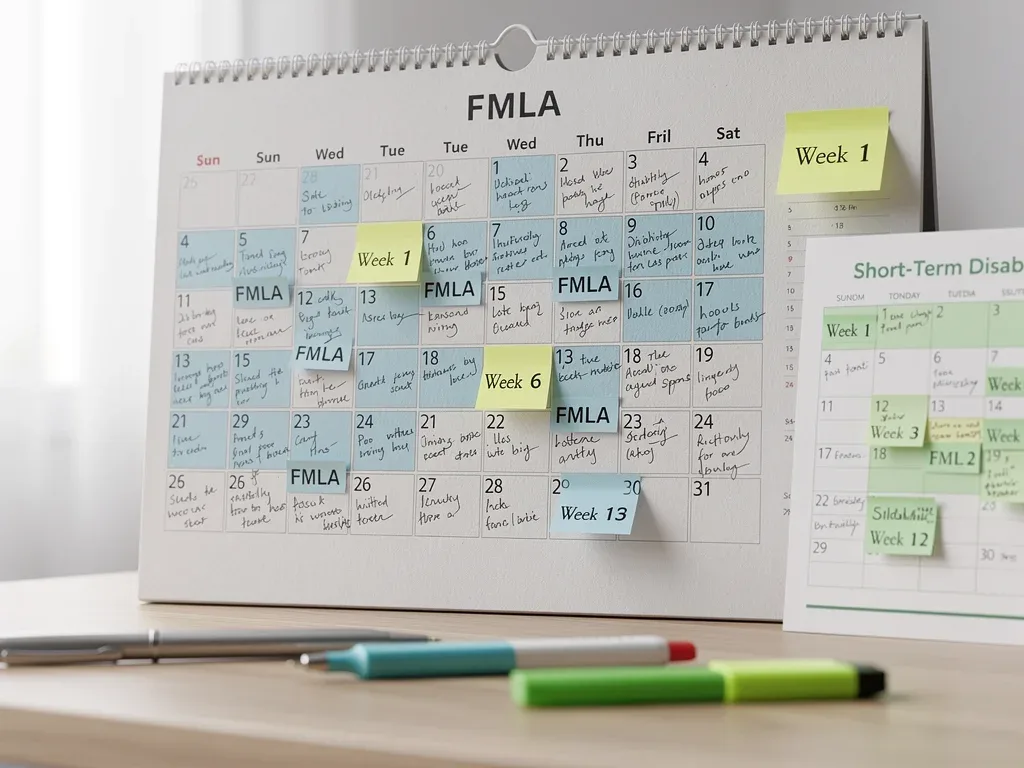
While federal protection guarantees up to 12 weeks of unpaid, job-protected absence, wage replacement policies fill the financial gap. By strategically stacking these benefit programs, you can maintain continuous cash flow and avoid living on reduced compensation during recovery.
Mastering this integration process ensures you receive full base pay without exhausting your personal savings. Here is your step-by-step roadmap to coordinating employer benefits and securing 100% of your earnings when you need them most.
Understanding FMLA and Short-Term Disability Basics
The Family and Medical Leave Act (FMLA) provides eligible employees with up to 12 weeks of unpaid, job-protected leave per year for specific family and medical reasons. While FMLA ensures job security, it does not mandate paid leave, which can create financial strain for many.
Short-term disability (STD) is an insurance benefit that replaces a portion of your income if you are temporarily unable to work due to illness, injury, or childbirth. Unlike FMLA, STD is not a federal mandate; it is typically offered by employers or purchased individually.
The key to preserving 100% of your base pay lies in strategically combining these two benefits. This coordination requires a clear understanding of each policy's specifics, including eligibility criteria, waiting periods, and benefit amounts, to avoid gaps in income.
FMLA Eligibility and Protections
To be eligible for FMLA, an employee must work for a covered employer, have worked for the employer for at least 12 months, and have completed at least 1,250 hours of service during the 12-month period immediately preceding the leave. The employer must also have 50 or more employees within 75 miles.
FMLA guarantees that you can return to the same or an equivalent job after your leave, with no loss of benefits. This protection is invaluable, as it removes the fear of job loss while dealing with significant life events, though the leave itself is generally unpaid.
Understanding these foundational aspects of FMLA is the first step in planning how to coordinate FMLA and Short-Term Disability. It sets the stage for integrating income replacement benefits effectively.
Eligibility for Short-Term Disability Benefits
Short-term disability policies vary significantly between employers and insurers. Generally, eligibility requires that you are unable to perform the essential duties of your job due to a non-work-related illness or injury, confirmed by a medical professional. Most policies have a waiting period, often 7 to 14 days, before benefits begin.
The duration of STD benefits typically ranges from three to six months, with some policies extending up to a year. The benefit amount usually covers 50% to 70% of your base salary, but rarely 100% on its own, making coordination with other benefits essential for full income replacement.
It is critical to review your specific STD policy document carefully to understand its terms, conditions, and benefit structure. This detailed knowledge is fundamental when planning how to coordinate FMLA and Short-Term Disability.
Navigating Waiting Periods and Benefit Duration
Most short-term disability plans include an elimination period, often referred to as a waiting period, which is the time between the onset of your disability and when benefits begin. During this period, you typically do not receive STD payments.
This waiting period is a critical factor in planning, as employees often use accrued sick leave, vacation time, or personal days to cover this gap. Understanding and planning for this period is vital to maintaining income continuity.
Once the waiting period is satisfied, STD benefits commence for a predefined period, which aligns with the temporary nature of the disability. This duration must be considered alongside your FMLA leave to ensure continuous coverage.
When you are looking to coordinate FMLA and Short-Term Disability, the first step is to thoroughly understand your employer’s specific policies. This includes both their FMLA administration and their short-term disability plan details.
Many employers require employees to use accrued paid time off (PTO), sick leave, or vacation time concurrently with FMLA. This can be beneficial as it allows you to receive full pay during portions of your leave, effectively bridging the gap where STD might not cover 100%.
It is essential to communicate early and clearly with your HR department. They can provide specific forms, deadlines, and guidance tailored to your company's benefits structure, which is crucial for a smooth coordination process.
Strategic Coordination for Full Pay Preservation
The primary strategy to achieve 100% of your base pay during FMLA leave is to layer your short-term disability benefits with other available paid leave options. This often involves using a combination of STD, sick leave, and vacation time.
For example, if your STD policy covers 60% of your pay, you might use accrued sick time to cover the remaining 40%. This approach ensures that your income remains at 100% during the period you are receiving STD benefits, which typically runs concurrently with FMLA.
Careful planning and understanding of your company's policies are paramount to successfully coordinate FMLA and Short-Term Disability. Each company’s approach to leave and benefits can differ significantly.
Maximizing Income During Leave
Many employers have policies that mandate or allow for the concurrent use of FMLA and other paid leave benefits. This means that while your leave is FMLA-protected, you can also draw from your paid leave bank, such as sick days or vacation days, to receive income.
When short-term disability benefits kick in, they typically run concurrently with FMLA. If your STD benefit is less than 100% of your pay, you can often use remaining paid time off to supplement the difference, ensuring you reach your full base pay.
This layering strategy is key to preserving your financial well-being during a critical period of absence. It requires proactive engagement with HR and a clear understanding of all available benefit options.
The Application and Approval Process
Initiating FMLA and short-term disability claims simultaneously is often the most efficient approach. This typically involves completing separate application forms for each benefit, often with medical certification from your healthcare provider. Your HR department is the central point for submitting these applications.
For FMLA, your employer will determine your eligibility based on federal guidelines and their internal policies. For short-term disability, the insurance carrier will review your medical documentation to approve your claim, ensuring it meets the definition of disability under your policy.
Timely submission of all required documentation is critical to avoid delays in approval and benefit payments. Understanding how to coordinate FMLA and Short-Term Disability involves navigating these administrative steps efficiently.
Documentation and Timelines
Medical Certification: Your healthcare provider must complete specific forms detailing your medical condition and the expected duration of your absence.
Employer Forms: Both FMLA and STD typically require forms from your employer outlining your job, salary, and leave eligibility.
Submission Deadlines: Be aware of any deadlines for submitting applications or certifications to avoid denial or delay of benefits.
It is advisable to keep copies of all submitted documents and maintain a log of communications with HR and the insurance carrier. This meticulous record-keeping can prove invaluable if any discrepancies or issues arise during your leave.
Common Challenges and Solutions
One common challenge is the waiting period for short-term disability, which can leave employees without income for the first week or two of their leave. The solution often involves using accrued paid time off (PTO) to cover this initial gap, ensuring a seamless transition into STD benefits.
Another challenge can be a lack of clear communication between HR, the employee, and the STD carrier. Proactive communication, asking specific questions, and getting answers in writing can help mitigate misunderstandings and ensure all parties are aligned on the coordination of benefits.
Understanding how to coordinate FMLA and Short-Term Disability means being prepared for these potential hurdles. Anticipating them allows for pre-emptive solutions and a smoother leave experience.
Addressing Benefit Gaps and Overlaps
Occasionally, an employee might face a scenario where their FMLA leave extends beyond their STD benefit period, or vice versa. In such cases, understanding the duration of each benefit is key to planning for potential income gaps.
If STD benefits end before FMLA, employees may need to rely solely on any remaining accrued PTO or take unpaid FMLA leave. Conversely, if STD benefits continue after FMLA, the employee may still receive income replacement even if their job protection under FMLA has concluded.
Consulting with HR to understand how these scenarios are handled within your company’s specific policies is vital for comprehensive planning. This ensures that you are fully informed about how to coordinate FMLA and Short-Term Disability.
The Role of Company Policy in Coordination
While FMLA is a federal law, its implementation and coordination with other benefits are often shaped by individual company policies. Some employers have more generous paid leave policies that can significantly enhance an employee’s ability to preserve 100% of their base pay.
Many companies require the concurrent use of FMLA and short-term disability, meaning that the FMLA clock starts ticking at the same time as your STD benefits. This ensures that your job protection and income replacement run in parallel.
It is imperative to obtain and thoroughly review your employer’s official leave and benefits policies. These documents will provide the definitive rules and procedures for how to coordinate FMLA and Short-Term Disability within your specific workplace.
Employer-Specific Rules and Benefits
Employers often offer additional paid leave options beyond what is federally mandated, such as company-specific sick leave, paid family leave, or even supplemental short-term disability plans. These can be crucial for achieving full income replacement.
Some companies may also have specific rules regarding how accrued PTO can be used in conjunction with STD, or if it is mandatory to exhaust PTO before STD benefits begin. These nuances must be understood to properly plan your leave.
Engaging with your HR department early and requesting a detailed explanation of all applicable policies will empower you to make informed decisions about your leave and financial planning.
Financial Planning During Your Leave
Even with careful coordination, managing finances during a leave of absence requires attention. Creating a budget that accounts for any potential income fluctuations, even minor ones, can alleviate stress. This budget should factor in the exact percentages of income replacement from STD and any supplementary PTO.
Consider setting aside an emergency fund prior to your leave, if possible. This can provide an additional buffer against unforeseen expenses or delays in benefit payments, ensuring greater peace of mind during your time away from work.
Understanding how to coordinate FMLA and Short-Term Disability is not just about the benefits themselves, but also about the broader financial strategy that supports your well-being.
Budgeting and Savings Strategies
Review Current Expenses: Identify fixed and variable expenses to understand your minimum financial needs during your leave.
Calculate Expected Income: Accurately project your income from STD and any supplemental paid leave.
Emergency Fund: Maintain or build an accessible savings fund to cover unexpected costs or delays.
Proactive financial planning can significantly reduce stress and allow you to focus on your recovery or family needs. This holistic approach complements the strategic coordination of your FMLA and STD benefits.

Legal Considerations and Employee Rights
Employees have specific rights under FMLA, including job protection and the continuation of health benefits during leave. Employers are legally obligated to adhere to FMLA regulations, and any perceived violations should be addressed promptly.
While short-term disability is an insurance benefit, it is also subject to contractual agreements and, in some cases, state insurance laws. Understanding your rights under your specific STD policy and any relevant state regulations is important.
If you encounter difficulties or believe your rights are being violated, consulting with an employment law attorney or a benefits specialist can provide valuable guidance. This ensures that your efforts to coordinate FMLA and Short-Term Disability are legally protected.
Seeking Professional Guidance
Navigating the complexities of FMLA and short-term disability can be daunting, especially when dealing with personal or family health issues. Human Resources departments are your first point of contact for company-specific information.
For broader legal questions or concerns about your rights, legal aid organizations or private employment attorneys specializing in FMLA and disability law can offer expert advice. Their insights can be crucial in complex situations.
Ensuring you have accurate information and support is a key component of successfully managing your leave and preserving your income. This proactive approach helps secure your benefits.
Key Aspect | Description |
|---|---|
FMLA Protection | Provides 12 weeks of job-protected, unpaid leave for eligible employees. |
STD Income Replacement | Replaces a portion of income (e.g., 50-70%) during temporary disability. |
100% Pay Strategy | Layer STD with accrued PTO (sick, vacation) to reach full base pay. |
Key Action | Communicate with HR early, understand policies, and submit documentation timely. |
Frequently Asked Questions About FMLA and STD Coordination
Can FMLA and Short-Term Disability run concurrently?▼
Yes, FMLA and Short-Term Disability often run concurrently. Most employers require that FMLA leave be designated at the same time an employee is receiving STD benefits. This ensures job protection under FMLA while income replacement is provided through STD during your eligible leave period.
How do I ensure 100% of my base pay during leave?▼
To ensure 100% of your base pay, you typically need to supplement your Short-Term Disability benefits with accrued paid time off (PTO), such as sick leave or vacation days. If STD covers 60% of your pay, you would use PTO to cover the remaining 40%, reaching full income.
What is the typical waiting period for Short-Term Disability?▼
The typical waiting period, or elimination period, for Short-Term Disability benefits is usually 7 to 14 days. During this time, you do not receive STD payments. Employees often use accrued sick leave or vacation time to cover income during this initial waiting period.
What if my FMLA leave is longer than my STD benefits?▼
If your FMLA leave extends beyond your Short-Term Disability benefits, the remainder of your FMLA leave will be unpaid. You may use any remaining accrued paid time off, if available, to receive income during this period. Your job protection under FMLA continues regardless.
Should I contact HR or the insurance company first?▼
It is best to contact your Human Resources department first. They can provide comprehensive information on your employer's specific FMLA and Short-Term Disability policies, guide you through the application process, and clarify how to coordinate 12 weeks of FMLA with Short-Term Disability to Preserve 100% of Your Base Pay effectively.
What this means
The ability to coordinate 12 weeks of FMLA with Short-Term Disability to Preserve 100% of Your Base Pay represents a critical financial safety net for many American workers. This detailed understanding allows individuals to approach periods of necessary leave with confidence, knowing their income and job security are protected.
As workplace benefits evolve, staying informed about your rights and available resources is paramount. This strategic coordination ensures that personal or family medical needs do not lead to undue financial hardship, reinforcing the importance of proactive planning and communication with employers.
Employees are encouraged to continuously review their benefits packages and engage with HR to clarify any ambiguities, ensuring they are always prepared to make the most of their available protections. This proactive stance is key to navigating complex benefit landscapes effectively.