France’s 2026 Budget Details: Social Programs & Debt Reduction Focus
Advertisements

Can a nation successfully protect its social safety net while aggressively tackling a mountain of public debt? Unpacking the France 2026 Budget Details reveals a high-stakes fiscal blueprint designed to navigate this exact economic tightrope.
This newly approved financial plan marks a definitive shift toward heightened fiscal responsibility across the Eurozone.
By strategically paring back non-essential outlays, the government aims to curb its sovereign deficit while carefully shielding vital public welfare programs from severe austerity.
For citizens and international market spectators alike, understanding this complex economic roadmap is crucial.
This breakdown explores the exact spending reallocations, debt-servicing frameworks, and legislative compromises that will shape the country’s financial trajectory throughout the year.
French Ministry Unveils 2026 Budget Priorities
The French Ministry of Finance officially unveiled the 2026 budget details, providing a clear roadmap for the nation’s financial future. The announcement, made on [Date of Announcement], emphasizes a dual focus on social well-being and economic stability.
This strategic direction reflects the government’s commitment to supporting vulnerable populations while simultaneously addressing long-term fiscal challenges. The outlined measures are expected to have broad implications across various sectors.
Key stakeholders, including economists and social welfare advocates, are now analyzing the comprehensive plan. Their initial reactions suggest a mixed but generally optimistic outlook on the proposed initiatives.
Key Allocations for Social Programs
A significant portion of the France 2026 Budget Details is dedicated to reinforcing social programs. These allocations aim to enhance the quality of life for French citizens, particularly in areas like healthcare, education, and family support.
The government plans to increase funding for public health initiatives, ensuring broader access to medical care and strengthening preventative measures. Education will also see substantial investment, focusing on modernizing facilities and improving teacher training.
- Increased funding for public healthcare infrastructure and personnel.
- Enhanced support for early childhood education and vocational training.
- Expanded social welfare benefits for low-income households.
Strategic Debt Reduction Initiatives
Alongside social investments, the French Ministry of Finance has outlined ambitious debt reduction strategies within the France 2026 Budget Details. These measures are designed to improve France’s fiscal health and ensure long-term economic sustainability.
The plan includes a combination of spending cuts in non-essential areas and targeted revenue generation initiatives. The goal is to bring down the national debt-to-GDP ratio to a more sustainable level over the coming years.
Economists have welcomed the focus on fiscal prudence, noting its importance for investor confidence and France’s standing in the European Union. The government is committed to transparent reporting on its progress.
Impact on France’s Economic Landscape
The France 2026 Budget Details are set to profoundly influence the nation’s economic landscape. The interplay between increased social spending and debt reduction efforts will shape growth patterns and market dynamics.
Analysts predict that the budget’s emphasis on social programs could stimulate domestic consumption and reduce income inequality. Simultaneously, fiscal consolidation is expected to bolster investor confidence and lower borrowing costs for the state.
However, careful implementation will be crucial to avoid any unintended economic slowdowns. The government’s ability to strike this delicate balance will be a key determinant of the budget’s overall success.
Sector-Specific Financial Projections
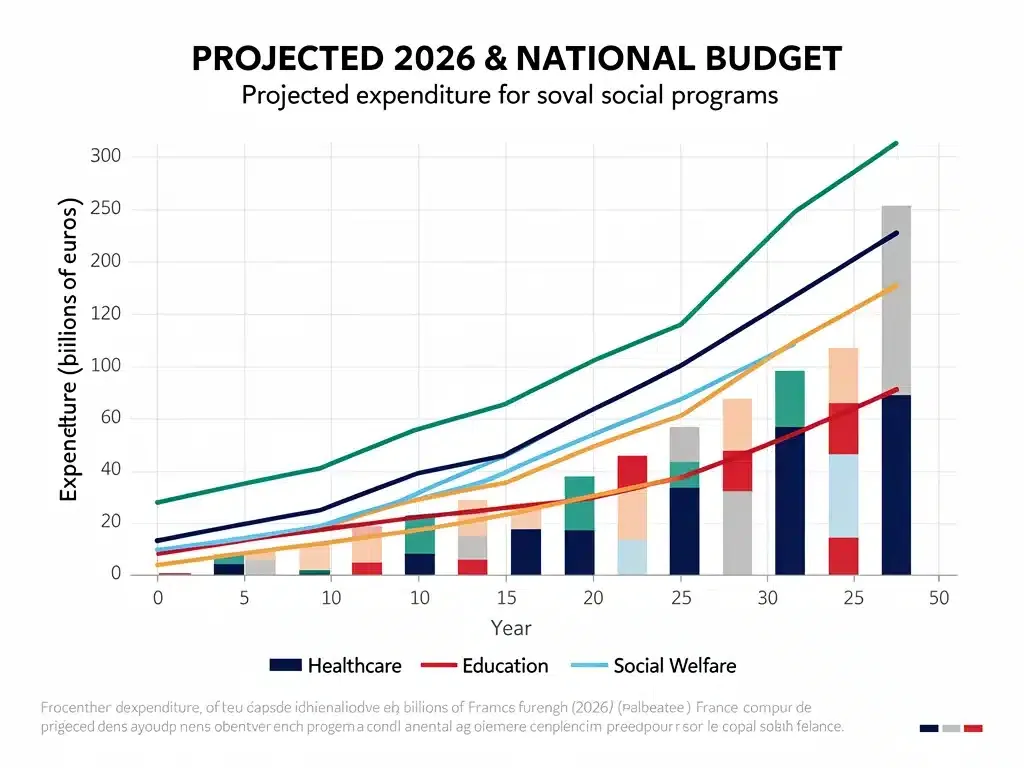
The 2026 budget provides detailed sector-specific financial projections, offering clarity on where investments and austerity measures will be concentrated. Key sectors like technology, renewable energy, and infrastructure are identified for strategic growth.
Conversely, some administrative departments face budget reallocations aimed at improving efficiency and reducing waste. These adjustments are part of a broader governmental effort to optimize public spending.
- Significant investment in green technologies and sustainable development projects.
- Modernization of digital infrastructure to support economic innovation.
- Streamlining of public administration processes for greater efficiency.
Anticipated Market Reactions
Financial markets are closely watching the France 2026 Budget Details for signals regarding future economic stability and investment opportunities. Initial reactions suggest a generally positive outlook, particularly concerning the commitment to debt reduction.
Bond yields are expected to remain stable, reflecting investor confidence in France’s fiscal management. The stock market may see opportunities in sectors benefiting from increased social spending and strategic government investments.
However, global economic uncertainties and geopolitical events could still influence market sentiment. The Ministry of Finance acknowledges these external factors and has built some flexibility into the budget plan.
Social Programs: A Deeper Dive
The commitment to social programs within the France 2026 Budget Details goes beyond mere allocation; it represents a philosophical stance on societal well-being. The government aims to create a more equitable and inclusive society through targeted interventions.
Specific initiatives include expanding affordable housing programs, improving access to mental health services, and increasing support for persons with disabilities. These programs are designed to address immediate needs and foster long-term social cohesion.
The Ministry has stated that these investments are not merely expenditures but rather investments in human capital and social resilience. The long-term benefits are expected to outweigh the initial costs.
Healthcare System Enhancements
A significant portion of the social program budget is earmarked for enhancing the national healthcare system. The France 2026 Budget Details include plans for hospital modernizations, increased medical staff, and improved access to specialized treatments.
There is also a strong focus on preventative healthcare, with campaigns and programs designed to promote healthier lifestyles and reduce the incidence of chronic diseases. Digitalization of health records is another key objective.
- Funding for new hospital equipment and infrastructure upgrades.
- Recruitment drives for doctors, nurses, and allied health professionals.
- Expansion of telemedicine services, especially in rural areas.
Educational Reforms and Funding
Education remains a cornerstone of France’s social policy, and the 2026 budget reflects this priority. The France 2026 Budget Details allocate substantial funds for educational reforms, from primary schools to universities.
Initiatives include reducing class sizes, investing in digital learning tools, and providing additional support for students from disadvantaged backgrounds. The goal is to ensure that every child has access to quality education, regardless of their socio-economic status.
Vocational training programs will also receive a boost, aligning educational outcomes with the needs of the modern job market. This holistic approach aims to prepare the next generation for future challenges.
Debt Reduction Strategies and Fiscal Responsibility
The strategic approach to debt reduction is a central pillar of the France 2026 Budget Details, reflecting a commitment to fiscal responsibility. The government aims to reduce its borrowing needs and ensure intergenerational equity.
Measures include reviewing existing public expenditures for efficiencies, optimizing tax collection processes, and divesting from non-strategic state assets. The objective is to create a more resilient public finance system.
This commitment to fiscal discipline is crucial for maintaining France’s credit rating and its influence within the global financial community. The Ministry of Finance is confident in its ability to meet these targets.
Budgetary Discipline and Spending Controls
The France 2026 Budget Details introduce stringent budgetary discipline and spending controls across all government departments. This proactive approach is designed to curb unnecessary expenditures and ensure that public funds are utilized effectively.
Each ministry will be held accountable for adhering to its allocated budget, with regular reviews and performance assessments. The aim is to foster a culture of financial prudence throughout the public sector.
- Implementation of new cost-cutting measures in administrative operations.
- Enhanced oversight mechanisms to prevent budget overruns.
- Prioritization of essential services while streamlining non-core functions.
Revenue Generation and Tax Policy
In addition to spending controls, the 2026 budget outlines targeted revenue generation initiatives and adjustments to tax policy. These measures are designed to increase state income without unduly burdening households or businesses.
The Ministry of Finance is exploring options to combat tax evasion more effectively and to modernize the tax administration system. There will be a strong emphasis on fairness and transparency in all tax-related matters.
Any tax adjustments will be carefully calibrated to support economic growth and investment. The government’s aim is to create a stable and predictable tax environment for all economic actors.
Challenges and Opportunities in Implementation
Implementing the France 2026 Budget Details will undoubtedly present both challenges and opportunities. Navigating political complexities and ensuring public acceptance will be key to its success.
The government will need to effectively communicate the rationale behind its decisions to gain public support for the reforms. Collaboration with local authorities and civil society organizations will also be crucial.
Despite potential hurdles, the budget offers significant opportunities to modernize France’s economy and strengthen its social fabric. The long-term benefits are expected to create a more prosperous and equitable society.
Political Consensus and Public Acceptance
Achieving political consensus and public acceptance for the France 2026 Budget Details is paramount. The government is engaging in extensive consultations with various political parties, trade unions, and citizen groups.
Transparency in decision-making and clear communication about the budget’s objectives are critical to building trust. Addressing concerns and incorporating feedback will be essential for smooth implementation.
- Ongoing dialogue with parliamentary committees and opposition parties.
- Public information campaigns to explain budget measures and their benefits.
- Mechanisms for citizen feedback and participation in policy discussions.
Long-Term Economic Outlook
The France 2026 Budget Details are designed with a long-term economic outlook in mind. The reforms aim to position France for sustained growth and resilience in a rapidly changing global economy.
By investing in human capital, promoting innovation, and ensuring fiscal stability, the government seeks to enhance France’s competitiveness. The budget is a foundational step towards a more dynamic and inclusive economic future.
The Ministry of Finance projects a positive trajectory for key economic indicators, provided the budget measures are implemented effectively. This forward-looking approach underscores the government’s commitment to future prosperity.
International Implications of France’s 2026 Budget
The France 2026 Budget Details also carry significant international implications, particularly within the European Union. France’s economic health and fiscal policies have a ripple effect across the Eurozone and beyond.
The commitment to debt reduction and economic stability is likely to be welcomed by France’s European partners. A strong French economy contributes to the overall stability and growth of the EU.
Furthermore, France’s investments in green technologies and social programs align with broader European objectives. The budget reinforces France’s role as a key player in shaping the future of Europe.
Eurozone Stability and French Fiscal Policy
France’s fiscal policy, as outlined in the France 2026 Budget Details, is crucial for Eurozone stability. The nation’s efforts to manage its debt and promote sustainable growth contribute directly to the economic health of the entire bloc.
European financial institutions and member states will be closely monitoring France’s adherence to its budgetary targets. A fiscally responsible France strengthens confidence in the Eurozone’s economic framework.
The Ministry of Finance has emphasized its commitment to working closely with European partners to ensure alignment with broader EU economic policies. This collaborative approach underscores France’s dedication to European integration.
Global Economic Competitiveness
The France 2026 Budget Details are also designed to enhance France’s global economic competitiveness. By fostering innovation, investing in strategic sectors, and maintaining fiscal prudence, France aims to attract international investment and talent.
The budget’s focus on research and development, particularly in areas like artificial intelligence and biotechnology, is intended to position France at the forefront of future industries. This strategic vision extends beyond national borders.
France’s economic policies will be closely watched by international businesses and investors looking for stable and growth-oriented markets. The budget seeks to project an image of a dynamic and reliable economic partner on the global stage.
| Key Point | Brief Description |
|---|---|
| Social Programs | Significant allocations to healthcare, education, and family support. |
| Debt Reduction | Strategic measures including spending cuts and revenue optimization. |
| Economic Impact | Expected to stimulate growth and bolster investor confidence. |
| International Role | Enhances Eurozone stability and global competitiveness. |
Frequently Asked Questions about France’s 2026 Budget
What are the main objectives of the France 2026 Budget Details?▼The primary objectives of the France 2026 Budget Details are to strengthen social programs, reduce national debt, and foster sustainable economic growth. The government aims to balance social welfare with fiscal responsibility to ensure long-term prosperity for all citizens.
How will social programs be affected by the 2026 budget?▼Social programs are set to receive significant additional funding, particularly in healthcare, education, and family support. The budget prioritizes enhancing access to essential services and improving the overall well-being of vulnerable populations across France.
What strategies are being employed for debt reduction in the France 2026 Budget Details?▼Debt reduction strategies include stringent spending controls across government departments, optimization of tax collection processes, and strategic asset divestment. These measures aim to lower the national debt-to-GDP ratio and ensure fiscal sustainability for the future.
What impact will the 2026 budget have on the French economy?▼The 2026 budget is expected to stimulate domestic consumption through social investments and boost investor confidence via fiscal prudence. While challenges remain, the overall aim is to foster a more dynamic, resilient, and equitable economic environment for France.
How does France’s 2026 budget influence its international standing?▼The budget’s focus on fiscal responsibility and strategic investments strengthens France’s position within the Eurozone and globally. It reinforces confidence among European partners and international investors, enhancing France’s role as a stable and competitive economic power.
Looking Ahead
The release of the France 2026 Budget Details marks a crucial moment for the nation’s economic and social trajectory.
The dual emphasis on robust social programs and disciplined debt reduction signals a balanced approach to governance, aiming for both immediate welfare and long-term stability.
Stakeholders will closely monitor the implementation phases, particularly how the ambitious targets for debt reduction are met amidst ongoing global economic shifts. The success of these measures will largely depend on effective execution and sustained political will.
As France moves forward, the 2026 budget stands as a testament to its commitment to a resilient economy and an inclusive society.
The implications of these France 2026 Budget Details will resonate for years to come, shaping the lives of its citizens and its standing on the international stage.