Strategic Debt Consolidation: Eliminating $12,000 in Revolving Credit
Advertisements
Feeling trapped by stubborn credit card balances where compounding interest eats up nearly every monthly payment? Using Strategic Debt Consolidation to replace $12,000 in high-APR revolving balances with a single 8.5% fixed-rate loan offers a clear, predictable path back to financial breathing room.
By rolling variable-rate accounts into one structured installment plan, borrowers lock in a steady monthly payment and a firm payoff date. Cutting double-digit credit card rates down to single digits redirects hundreds of dollars away from interest charges and straight toward your principal balance.
Whether you are comparing personal loan offers or calculating your exact break-even timeline, understanding the math behind refinancing makes all the difference. Here is how eliminating $12,000 in revolving debt works in practice and what terms to watch before signing.
The Current Landscape of Revolving Credit Debt
Revolving credit, primarily credit card debt, continues to be a significant financial burden for millions of households across the United States. High variable interest rates and minimum payments often trap consumers in a cycle of perpetual debt, making true progress difficult.
The average American carries substantial credit card balances, with interest charges accumulating rapidly and compounding the overall debt. This financial pressure can impact credit scores, limit borrowing capacity, and create considerable stress for individuals and families.
Experts consistently advise that addressing high-interest revolving debt should be a top priority for anyone seeking financial improvement. Strategic Debt Consolidation directly targets this pervasive issue.
Why Revolving Credit Becomes Problematic
Revolving credit offers flexibility but comes with inherent risks, especially for those who carry balances month-to-month. The variable interest rates can fluctuate, making monthly payments unpredictable and often increasing the total cost of borrowing over time.
Many consumers find themselves paying mostly interest, with very little of their payment going towards the principal balance. This scenario prolongs the debt repayment period and significantly increases the overall amount repaid, hindering financial progress.
The ease of access to revolving credit can also lead to overspending, further exacerbating debt issues. Without a clear strategy, individuals can quickly accumulate balances that become challenging to manage, underscoring the need for solutions like Strategic Debt Consolidation.
Understanding the 8.5% Fixed Loan Advantage
A fixed-rate personal loan, particularly one at 8.5% to consolidate $12,000 in revolving credit, presents several distinct advantages. The predictability of a fixed interest rate is a cornerstone of this financial strategy, offering stability in an often volatile economic environment.
With a fixed loan, your monthly payment remains consistent throughout the loan term, allowing for more accurate budgeting and financial planning. This eliminates the uncertainty associated with variable rates, providing peace of mind and a clear path to debt freedom.
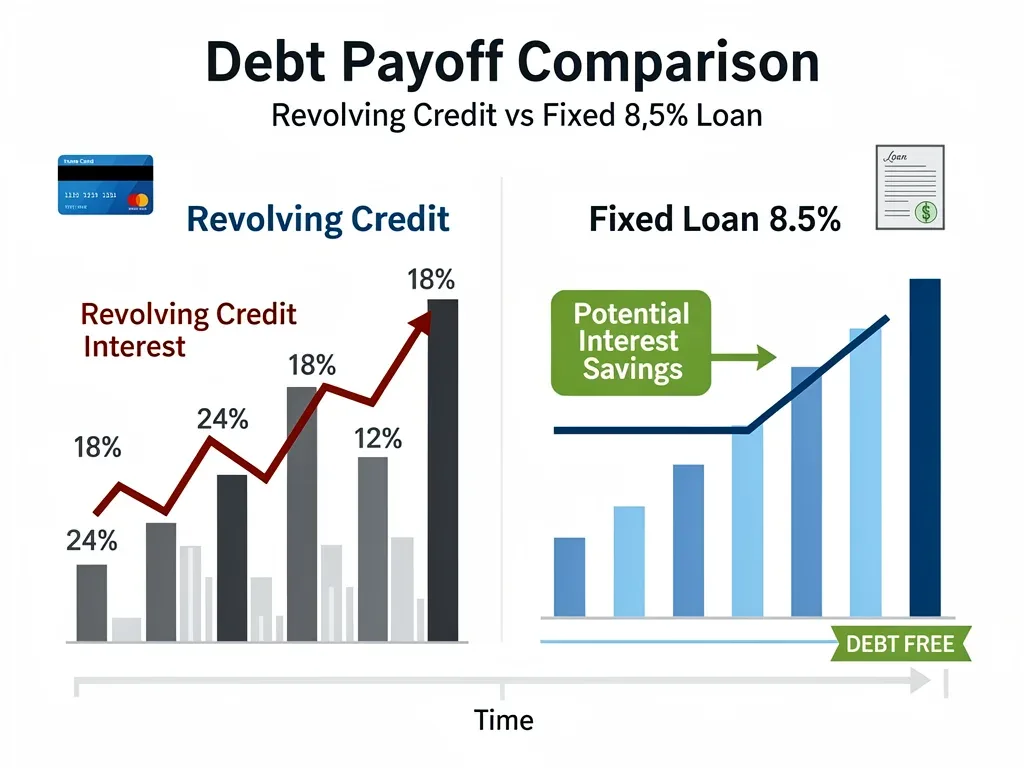
Furthermore, an 8.5% fixed loan is often significantly lower than the average interest rates charged on credit cards, which can range from 18% to over 25%. This direct reduction in interest expense is a primary driver for pursuing Strategic Debt Consolidation.
Key Benefits of a Fixed-Rate Loan
Predictable Payments: Your monthly payment amount remains the same, simplifying budgeting.
Lower Interest Costs: An 8.5% rate is typically much lower than credit card APRs, saving money.
Defined Payoff Date: A fixed loan comes with a clear end date, motivating consistent repayment.
Credit Score Improvement: Consolidating multiple debts into one can positively impact your credit utilization.
The structured nature of a fixed loan helps consumers avoid the pitfalls of minimum payments that barely touch the principal. Instead, every payment contributes meaningfully to reducing the overall debt, accelerating the path to being debt-free.
The Process of Strategic Debt Consolidation
Embarking on Strategic Debt Consolidation involves several key steps. The initial phase requires a thorough assessment of your existing revolving credit balances, interest rates, and minimum payment obligations.
Once you have a clear picture of your current debt, the next step is to research and apply for personal loans. Lenders will evaluate your creditworthiness, income, and debt-to-income ratio to determine eligibility and the interest rate offered.
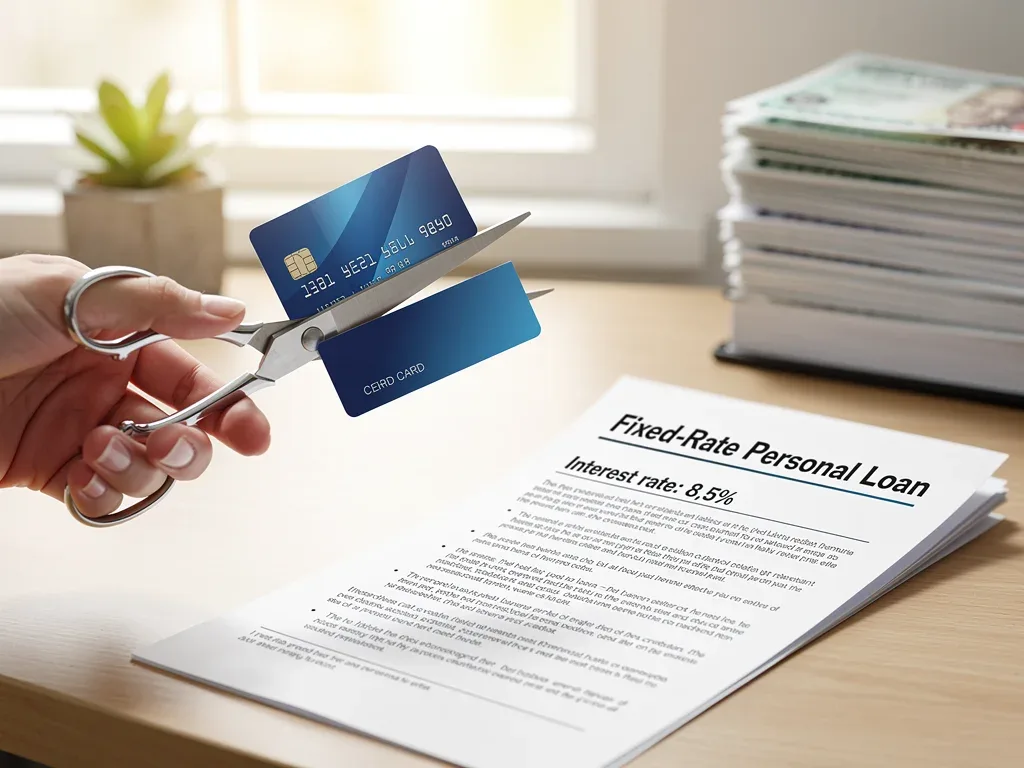
Upon approval and funding of the 8.5% fixed loan, the consolidated funds are used to pay off the existing high-interest revolving credit accounts. This action effectively closes those high-interest lines of credit, replacing them with a single, manageable installment loan. This is the essence of Strategic Debt Consolidation.
Steps to Consolidate $12,000 Effectively
Start by gathering all statements from your credit cards and other revolving credit accounts. This will help you understand the total amount of debt and the various interest rates you are paying.
Next, explore different lenders, including banks, credit unions, and online lenders, for personal loan options. Compare their interest rates, fees, and repayment terms to find the best fit for your situation, aiming for that 8.5% fixed rate.
Once you secure the loan, promptly use the funds to pay off your credit card balances. It is crucial to then resist the temptation to use those newly freed-up credit lines, ensuring the success of your Strategic Debt Consolidation efforts.
Potential Challenges and How to Mitigate Them
While Strategic Debt Consolidation: Eliminating $12,000 in Revolving Credit with an 8.5% Fixed Loan offers significant advantages, it is not without potential challenges. Borrowers must be aware of these hurdles to ensure a successful outcome and avoid falling back into debt.
One common pitfall is securing the consolidation loan but then continuing to use the credit cards that were paid off. This can lead to accumulating new debt on top of the consolidation loan, worsening the financial situation rather than improving it.
Another challenge can be qualifying for an 8.5% fixed loan, especially if your credit score is not optimal. Lenders reserve the lowest rates for borrowers with strong credit profiles, meaning some individuals may initially be offered higher rates. Diligence and financial discipline are key to successfully navigating Strategic Debt Consolidation.
Strategies for Overcoming Obstacles
Financial Discipline: Commit to not using the credit cards once they are paid off. Consider closing them if temptation is a major concern.
Credit Improvement: If your credit score is low, work on improving it before applying for a consolidation loan to secure a better rate.
Budgeting: Create and stick to a strict budget to ensure you can comfortably make your fixed loan payments and avoid new debt.
Emergency Fund: Build an emergency fund to cover unexpected expenses, reducing the need to rely on credit cards again.
It is important to view Strategic Debt Consolidation as a fresh start. This mindset helps maintain the discipline required to fully benefit from the strategy and achieve long-term financial health.
Impact on Credit Score and Financial Health
The decision to pursue Strategic Debt Consolidation can have a multifaceted impact on your credit score and overall financial health. Understanding these effects is crucial for making informed financial decisions.
Initially, applying for a new loan can result in a temporary dip in your credit score due to a hard inquiry. However, the long-term benefits typically outweigh this short-term effect, especially as high-interest revolving debt is eliminated.
Once the revolving credit accounts are paid off, your credit utilization ratio – the amount of credit you're using versus the amount available – will significantly decrease. This is a major positive factor for your credit score, indicating responsible credit management. This positive shift is a direct result of Strategic Debt Consolidation.
Long-Term Financial Benefits
Consolidating debt into a fixed-rate loan simplifies your financial obligations, making it easier to manage payments and avoid missed deadlines. This consistent payment history is a powerful contributor to a healthy credit score over time.
The reduction in interest paid means more of your money goes towards the principal, freeing up cash flow for savings, investments, or other financial goals. This improved cash flow is a tangible benefit of Strategic Debt Consolidation.
Ultimately, successfully managing and eliminating debt through consolidation builds financial confidence and reduces stress. It provides a solid foundation for future financial planning and achieving greater economic security, demonstrating the profound impact of Strategic Debt Consolidation.
Choosing the Right Lender for Your Consolidation Loan
Selecting the appropriate lender is a critical step in the process of Strategic Debt Consolidation. Not all lenders offer the same terms, rates, or customer service, making careful comparison essential.
Prospective borrowers should look for lenders that specialize in personal loans for debt consolidation and have a strong reputation for transparency and fair practices. Online reviews and financial consumer watchdog reports can provide valuable insights into a lender's reliability.
It is also important to compare not just the interest rate, but also any associated fees, such as origination fees or prepayment penalties. A truly effective Strategic Debt Consolidation minimizes overall costs.
Factors to Consider When Selecting a Lender
Interest Rate: Prioritize lenders offering competitive fixed rates, ideally at or below 8.5%.
Fees: Be aware of any upfront fees or charges that could increase the total cost of the loan.
Repayment Terms: Look for flexible repayment periods that align with your budget and financial goals.
Customer Service: Choose a lender with a reputation for excellent customer support and clear communication.
Don't hesitate to obtain quotes from multiple lenders to ensure you are getting the best possible terms for your Strategic Debt Consolidation. A little research upfront can lead to significant savings over the life of the loan.
Real-World Success Stories and Expert Endorsements
The effectiveness of Strategic Debt Consolidation is frequently highlighted through real-world success stories and endorsements from financial experts. These narratives underscore the tangible benefits of a structured approach to debt management.
Countless individuals have successfully transitioned from overwhelming credit card debt to manageable fixed loan payments, significantly improving their financial outlook. These stories often emphasize the psychological relief that comes with a clear debt repayment plan.
Financial advisors consistently recommend debt consolidation as a viable strategy for those struggling with high-interest revolving credit. They often point to the predictable payments and potential interest savings as key motivators for pursuing Strategic Debt Consolidation.
Testimonials and Professional Views
Many individuals report feeling a profound sense of control over their finances after consolidating their debt. The shift from multiple high-interest payments to a single, lower-interest fixed payment often marks a turning point in their financial journey.
Experts in personal finance frequently publish articles and conduct workshops advocating for debt consolidation as a responsible financial tool. They highlight how an 8.5% fixed loan can be a game-changer for someone burdened by $12,000 in revolving credit, transforming their financial landscape.
These endorsements from both individuals and professionals reinforce the validity and efficacy of Strategic Debt Consolidation as a powerful solution for debt relief.
Key Point | Brief Description |
|---|---|
Debt Consolidation | Combines multiple high-interest debts into a single, lower-interest loan. |
8.5% Fixed Loan | Offers a stable interest rate, simplifying payments and reducing overall cost. |
Eliminating Revolving Credit | Pays off high-APR credit cards, preventing further accumulation of variable interest. |
Financial Impact | Improves credit utilization, reduces stress, and accelerates debt freedom. |
Frequently Asked Questions About Debt Consolidation
What is Strategic Debt Consolidation: Eliminating $12,000 in Revolving Credit with an 8.5% Fixed Loan?▼
It is a financial strategy where an individual takes out a new personal loan with a fixed interest rate, typically 8.5%, to pay off high-interest revolving credit card debts totaling $12,000. This simplifies payments and reduces overall interest costs significantly.
How does an 8.5% fixed loan benefit me over revolving credit?▼
An 8.5% fixed loan provides predictable monthly payments and a lower interest rate compared to typical credit card APRs, which often exceed 18-25%. This structure allows more of your payment to go towards the principal, accelerating debt payoff.
Will Strategic Debt Consolidation: Eliminating $12,000 in Revolving Credit with an 8.5% Fixed Loan affect my credit score?▼
Initially, a hard inquiry for the new loan may cause a slight dip. However, paying off high-balance credit cards will lower your credit utilization, which is a major positive factor, often leading to an improved score in the long run.
What should I do after consolidating my debt with the fixed loan?▼
It is crucial to resist using the credit cards that were paid off. Focus on making consistent payments on your new 8.5% fixed loan and consider building an emergency fund to avoid accumulating new debt in the future.
Where can I find an 8.5% fixed loan for debt consolidation?▼
You can explore options from traditional banks, credit unions, and online lenders. Compare interest rates, fees, and terms from multiple providers to secure the most favorable 8.5% fixed loan for your Strategic Debt Consolidation: Eliminating $12,000 in Revolving Credit needs.
Perspectives and Future Implications
The increasing interest in Strategic Debt Consolidation underscores a broader shift in consumer financial behavior towards more structured debt management. This approach not only provides immediate relief but also sets a foundation for long-term financial stability.
As economic conditions evolve, the predictability and lower interest costs offered by fixed loans will likely continue to attract individuals seeking to escape the cycle of high-interest revolving debt. The emphasis on proactive financial planning is becoming paramount.
For those considering this path, staying informed about market rates and lender offerings remains crucial. The success of Strategic Debt Consolidation hinges on diligent research and unwavering financial discipline, setting a precedent for smarter borrowing in the future.