French Inflation 2026: 2.5% Stability & Impact Analysis
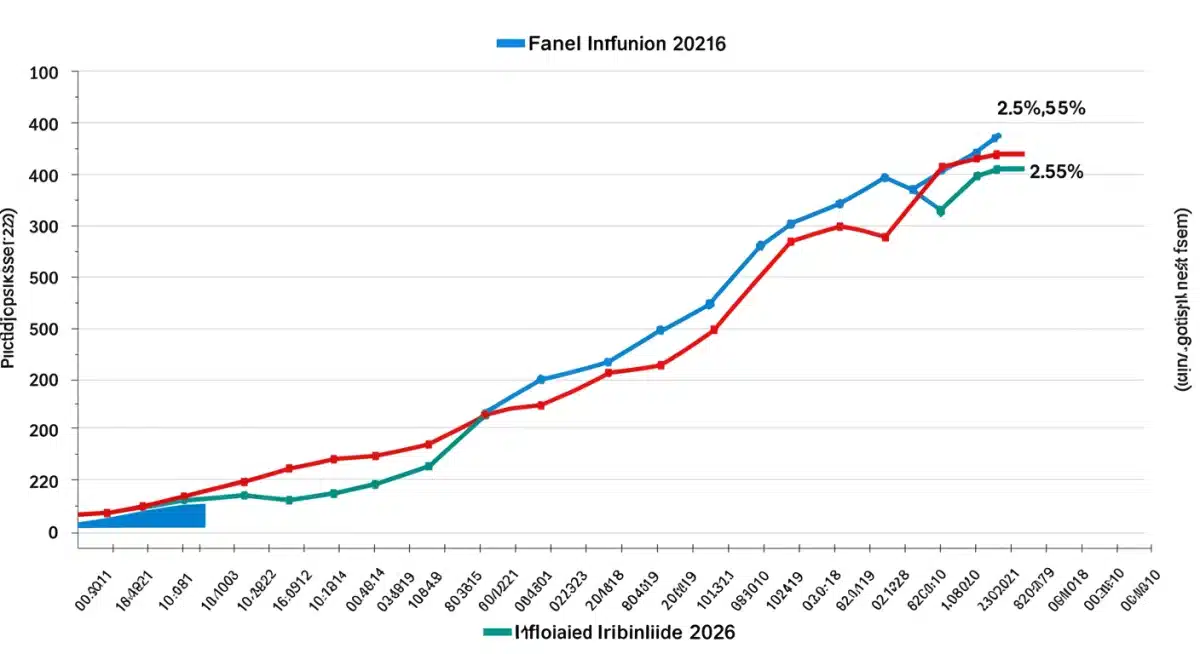
The French Inflation 2026 Outlook projects stabilization at 2.5%, a crucial development for households and businesses. This forecast directly impacts purchasing power and the dynamics of loan repayments across France.
Understanding these economic shifts is essential for financial planning and decision-making in the coming years. Experts anticipate both opportunities and challenges arising from this stabilized inflation rate.
This report provides a detailed analysis of the implications, offering valuable insights for consumers, investors, and policymakers navigating the evolving French economic landscape.
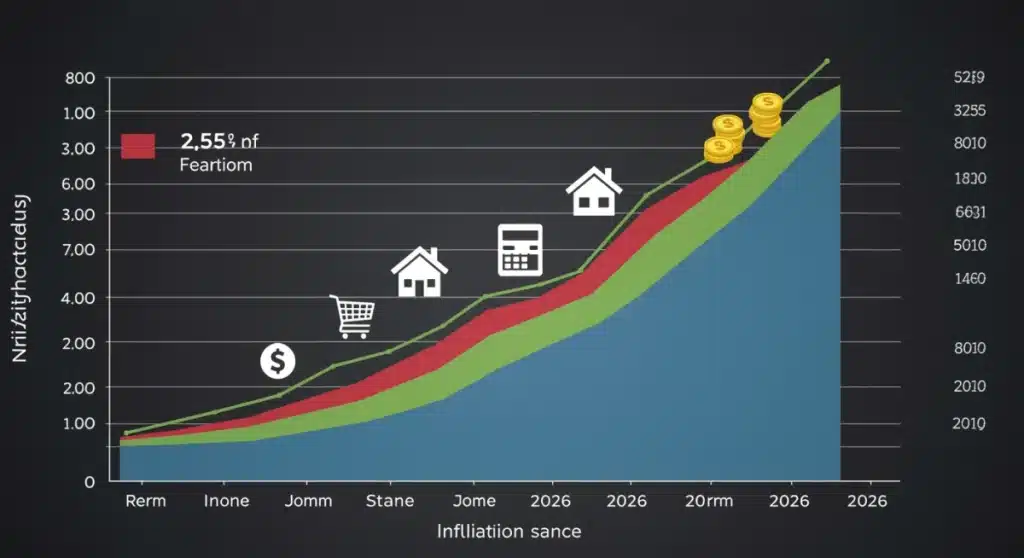
The latest developments on Economic Outlook 2026: French Inflation Projected to Stabilize at 2.5% – Impact on Purchasing Power and Loan Repayments. are shaping today’s agenda, with key facts, verified sources, and what readers need to monitor next in France, presented clearly.
Understanding these economic shifts is essential for financial planning and decision-making in the coming years. Experts anticipate both opportunities and challenges arising from this stabilized inflation rate.
This report provides a detailed analysis of the implications, offering valuable insights for consumers, investors, and policymakers navigating the evolving French economic landscape.
Economic Outlook 2026: French Inflation Projected to Stabilize at 2.5% – Impact on Purchasing Power and Loan Repayments. is at the forefront of financial discussions, with recent data and expert analyses pointing towards a significant shift in the nation’s economic landscape. This projection, if realized, carries profound implications for every household and business across France, influencing everything from daily spending habits to long-term financial commitments.
The stabilization of inflation at 2.5% represents a crucial benchmark for economic stability, signaling a potential return to more predictable financial conditions after a period of volatility. This article delves into the specifics of this forecast, examining its anticipated effects on consumer behavior, the cost of living, and the critical area of loan repayments within the French financial system.
Our aim is to provide a clear, factual, and forward-looking perspective on what this economic outlook means for you, offering actionable insights and highlighting the key indicators to watch as France approaches 2026. Understanding these dynamics is paramount for making informed financial decisions.
Understanding the 2026 Inflation Projection
The latest economic forecasts for France indicate a projected stabilization of inflation at 2.5% by 2026, a figure meticulously derived from a comprehensive analysis of various economic indicators.
This projection reflects a concerted effort by central banks and the French government to curb inflationary pressures experienced in recent years, aiming for a more sustainable economic environment.
Such stabilization is critical for fostering confidence among consumers and investors, providing a clearer horizon for future financial planning and investment strategies within the French economy.
The journey to a 2.5% inflation rate by 2026 involves a delicate balance of fiscal and monetary policies. Analysts suggest that the European Central Bank’s (ECB) interest rate decisions, coupled with the French government’s budgetary measures, are pivotal in guiding this trajectory.
These interventions are designed to manage aggregate demand and supply-side shocks, ensuring that the economy neither overheats nor enters a recessionary period. The French Inflation 2026 Outlook largely hinges on the effectiveness of these coordinated policy responses.
Furthermore, global economic factors, such as energy prices and supply chain stability, will continue to play a role in shaping France’s inflation landscape. While domestic policies are powerful, external forces can introduce volatility, making the 2.5% target a challenging yet achievable goal.
Impact on Purchasing Power in France
The stabilization of inflation at 2.5% in France by 2026 is expected to have a mixed but generally more favorable impact on purchasing power compared to recent volatile periods.
While a 2.5% inflation rate still means that prices will continue to rise, the predictability offers a degree of certainty that allows households to better plan their expenditures and savings.
This stability is particularly crucial for low and middle-income households, who are often most vulnerable to unpredictable price increases and erosion of their real income.
Consumer Spending and Real Wages
A stabilized inflation rate at 2.5% implies that the rise in the cost of living will be more manageable, potentially allowing real wages to catch up or even slightly increase if wage growth outpaces inflation.
This scenario could lead to a rebound in consumer confidence and discretionary spending, stimulating economic growth across various sectors in France.
However, the actual impact will depend heavily on the evolution of wage negotiations and the labor market dynamics over the next few years. The French Inflation 2026 Outlook directly influences these discussions.
- Wage growth needs to exceed 2.5% to increase real purchasing power.
- Consumer confidence is expected to improve with greater price stability.
- Discretionary spending may see a modest recovery, boosting retail and services.
Conversely, if wage growth stagnates below the 2.5% inflation rate, households will still experience a decline in their purchasing power, albeit at a slower and more predictable pace. This highlights the importance of robust wage policies alongside inflation management.
Ramifications for Loan Repayments
The projected stabilization of French inflation at 2.5% by 2026 holds significant implications for individuals and businesses with existing loans, as well as for those contemplating new borrowing.
For current borrowers, particularly those with variable-rate loans, a stable inflation environment can bring a sense of relief, as it often correlates with more predictable interest rate movements.
This stability reduces the uncertainty surrounding monthly repayment amounts, enabling better financial planning and mitigating the risk of payment defaults.
Mortgage and Consumer Loan Dynamics
In the mortgage market, a 2.5% inflation rate could translate into sustained, albeit potentially slightly higher, fixed interest rates for new loans, reflecting the market’s expectation of moderate price increases.
For those with existing fixed-rate mortgages, their repayment burden remains unchanged in nominal terms, meaning their real repayment cost decreases over time as inflation erodes the value of money.
This dynamic makes fixed-rate loans more attractive during periods of stable, positive inflation, offering a hedge against future price increases. The French Inflation 2026 Outlook is a key factor here.
- Fixed-rate loan holders benefit from a reduced real debt burden.
- Variable-rate loan holders gain predictability with stable inflation.
- New borrowers might face slightly higher but stable interest rates.
For consumer loans, the impact is similar. Stable inflation reduces the risk premium lenders demand, potentially leading to more competitive interest rates for personal loans and credit. This could encourage borrowing for larger purchases, further stimulating the French economy.
Government and Central Bank Strategies
Achieving the projected 2.5% inflation stabilization by 2026 is not a passive outcome but the result of deliberate and coordinated strategies by the French government and the European Central Bank (ECB).
These strategies encompass a range of fiscal and monetary policy tools aimed at steering the economy towards price stability while supporting sustainable growth and employment.
The effectiveness of these measures will be continuously monitored and adjusted in response to evolving economic conditions both domestically and globally, ensuring the French Inflation 2026 Outlook remains on track.
Monetary Policy Adjustments
The ECB’s role is paramount in managing inflation across the Eurozone, including France. Its primary tool is adjusting key interest rates, which influence borrowing costs and money supply.
To achieve the 2.5% target, the ECB is expected to maintain a calibrated approach, potentially signaling a pause or even minor adjustments to rates once inflation shows clear signs of sustained deceleration.
Forward guidance from the ECB will be crucial in shaping market expectations and investor confidence regarding future inflation trends.
Fiscal policies implemented by the French government complement the ECB’s efforts. These include targeted spending, tax adjustments, and structural reforms designed to enhance productivity and competitiveness.
Such measures can help alleviate supply-side pressures that contribute to inflation, ensuring that price stability is achieved without stifling economic activity. The synergy between fiscal and monetary policies is key to the success of the French Inflation 2026 Outlook.
Sector-Specific Economic Implications
The stabilization of French inflation at 2.5% by 2026 will not affect all economic sectors uniformly; some industries are poised to benefit more, while others might face particular challenges.
Understanding these sector-specific implications is vital for businesses and investors to adapt their strategies and capitalize on the evolving economic environment.
The varying sensitivities to inflation across sectors mean that a stable rate can either alleviate cost pressures or intensify competition, depending on their operational structures and market dynamics.
Real Estate and Retail Sectors
In the real estate sector, stabilized inflation could lead to more predictable construction costs and property values, potentially encouraging investment and stabilizing the housing market.
For retail, a more stable purchasing power might translate into consistent consumer demand, though retailers will still need to manage their pricing strategies carefully to maintain competitiveness.
The French Inflation 2026 Outlook offers a more stable backdrop for long-term planning in these capital-intensive and consumer-driven sectors.
- Construction costs may stabilize, aiding new housing projects.
- Property values could see more gradual, predictable increases.
- Retail sector benefits from more stable consumer confidence and demand.
Conversely, sectors heavily reliant on imported goods or energy might still experience cost pressures if global commodity prices remain volatile. Businesses in these areas will need to focus on supply chain resilience and efficiency to mitigate inflationary impacts.

Risks and Uncertainties to the Forecast
While the projection of French inflation stabilizing at 2.5% by 2026 offers a positive outlook, it is crucial to acknowledge the inherent risks and uncertainties that could derail this forecast.
The global economic landscape remains dynamic, with geopolitical tensions, commodity price volatility, and potential new supply chain disruptions posing significant challenges.
These external factors, combined with domestic policy execution risks, necessitate a cautious approach to long-term economic planning and continuous monitoring of key indicators.
Geopolitical and Global Economic Factors
Unforeseen geopolitical events, such as new conflicts or trade wars, could trigger fresh energy price spikes or disrupt global trade routes, directly impacting import costs and domestic inflation in France.
Similarly, a global economic slowdown or recession could reduce demand for French exports, putting downward pressure on economic growth and potentially affecting the inflation trajectory.
The French Inflation 2026 Outlook is thus subject to a complex interplay of international forces beyond national control.
- Geopolitical conflicts can disrupt supply chains and commodity prices.
- Global economic slowdowns may impact French export demand.
- Unexpected shifts in external demand or supply could alter inflation.
Domestically, the effectiveness of government and central bank policies in managing inflation is also subject to execution risks. Delays in policy implementation or unforeseen consumer and business reactions could lead to deviations from the projected 2.5% target.
Preparing for the New Economic Climate
As France moves towards a projected inflation stabilization at 2.5% by 2026, both individuals and businesses must proactively prepare for this new economic climate to optimize their financial strategies.
This preparation involves a thorough review of personal budgets, investment portfolios, and business operating models to align them with the anticipated changes in purchasing power and borrowing costs.
Strategic planning now can help mitigate potential risks and unlock opportunities in a more predictable inflationary environment.
Financial Planning for Households
Households should consider revisiting their budgets, focusing on optimizing savings and investment strategies. For those with variable-rate loans, assessing the potential for refinancing into fixed rates might offer greater long-term stability.
Understanding how the French Inflation 2026 Outlook affects the real value of savings and future expenditures is crucial for maintaining financial well-being.
Diversifying investments and considering inflation-protected assets can also provide a hedge against any unexpected shifts in price levels.
Long-Term Economic Stability and Growth
The projected stabilization of French inflation at 2.5% by 2026 is not merely a short-term forecast but a foundational element for fostering long-term economic stability and sustainable growth.
Achieving and maintaining this level of price stability can create an environment conducive to increased investment, innovation, and job creation across various sectors.
This stability allows businesses to plan with greater certainty, encouraging capital expenditure and expansion, which are vital for enhancing national productivity.
A predictable inflation rate also strengthens the competitiveness of French exports by providing a more stable pricing environment for international trade. This can boost export volumes and contribute positively to France’s balance of payments, reinforcing its position within the global economy.
The French Inflation 2026 Outlook, therefore, extends beyond domestic financial considerations to influence France’s international economic standing.
Furthermore, long-term inflation stability can lead to lower long-term interest rates, making borrowing more affordable for both the government and private sector. This reduces the cost of public debt and frees up resources for essential public services and infrastructure projects, indirectly benefiting all citizens.
| Key Point | Brief Description |
|---|---|
| Inflation Target | French inflation projected to stabilize at 2.5% by 2026. |
| Purchasing Power | Stabilization offers more predictability for household budgets; real wages may improve. |
| Loan Repayments | Predictable interest rates for variable loans, reduced real burden for fixed-rate loans. |
| Economic Policy | Coordinated efforts by ECB and French government crucial for achieving stability. |
Frequently Asked Questions About French Inflation 2026 Outlook
Stabilization at 2.5% means prices will continue to rise, but at a more predictable and manageable rate. This allows households to plan budgets more effectively, and if wage growth outpaces this, real purchasing power could see a modest improvement, easing financial strain.
For new mortgages, rates might be stable but potentially slightly higher than current lows, reflecting moderate inflation expectations. Existing fixed-rate loan holders will see their real debt burden decrease over time. Variable-rate borrowers will benefit from greater interest rate predictability due to the stable French Inflation 2026 Outlook.
The ECB manages monetary policy, primarily through interest rates, to control inflation across the Eurozone. The French government implements fiscal policies like spending and taxes. Their coordinated efforts are crucial to balance price stability with economic growth and achieve the French Inflation 2026 Outlook.
Yes, significant risks include unforeseen geopolitical events, continued volatility in global energy and commodity prices, and new supply chain disruptions. Domestic policy execution challenges or unexpected shifts in consumer behavior could also impact the French Inflation 2026 Outlook.
Individuals should review budgets, consider refinancing variable-rate loans, and diversify investments. Businesses should focus on supply chain resilience, pricing strategies, and efficiency to adapt to the stable, yet still rising, cost environment indicated by the French Inflation 2026 Outlook.
What this means
The projected stabilization of French Inflation 2026 Outlook at 2.5% marks a pivotal moment for the French economy, offering a more predictable financial environment for households and businesses alike. This forecast empowers consumers to plan expenditures with greater confidence and allows companies to make investment decisions with reduced uncertainty.
However, vigilance remains key. While the outlook is positive, global factors and the continued effectiveness of domestic policies will dictate the ultimate realization of this stability. Monitoring real wage growth against inflation, interest rate movements, and global economic shifts will be crucial.
The coming years will test the resilience of the French economy and the efficacy of its financial institutions. Adapting to this new climate through informed financial planning and strategic business adjustments will be essential for navigating the path ahead successfully.