Educating French Consumers on the 2026 European Digital Finance Strategy: 5 Key Changes to Understand Now
Advertisements

The way you manage, spend, and protect your money in France is getting a massive regulatory upgrade. Aligning your personal finances with the incoming EU Digital Finance Strategy is no longer optional—it is the baseline for secure banking in a hyper-connected world.
This sweeping pan-European overhaul is dismantling obsolete framework systems to build a highly fortified, seamless transaction landscape.
From cutting-edge cybersecurity mandates for traditional banks to unified oversight for cryptocurrency platforms, the rules of the monetary game have permanently evolved.
For French account holders, this regulatory evolution brings unprecedented safety measures, instant zero-cost transfers, and aggressive fraud prevention protocols.
Here is your essential guide to navigating these five structural changes, avoiding regional pitfalls, and capitalizing on Europe’s newly integrated financial ecosystem.
Understanding the European Digital Finance Strategy’s Core Objectives
The European Digital Finance Strategy aims to position the EU as a global leader in digital finance, leveraging technology to create a more integrated and competitive financial market.
It seeks to remove fragmentation, promote technological adoption, and address the challenges posed by digitalization, such as cybersecurity risks.
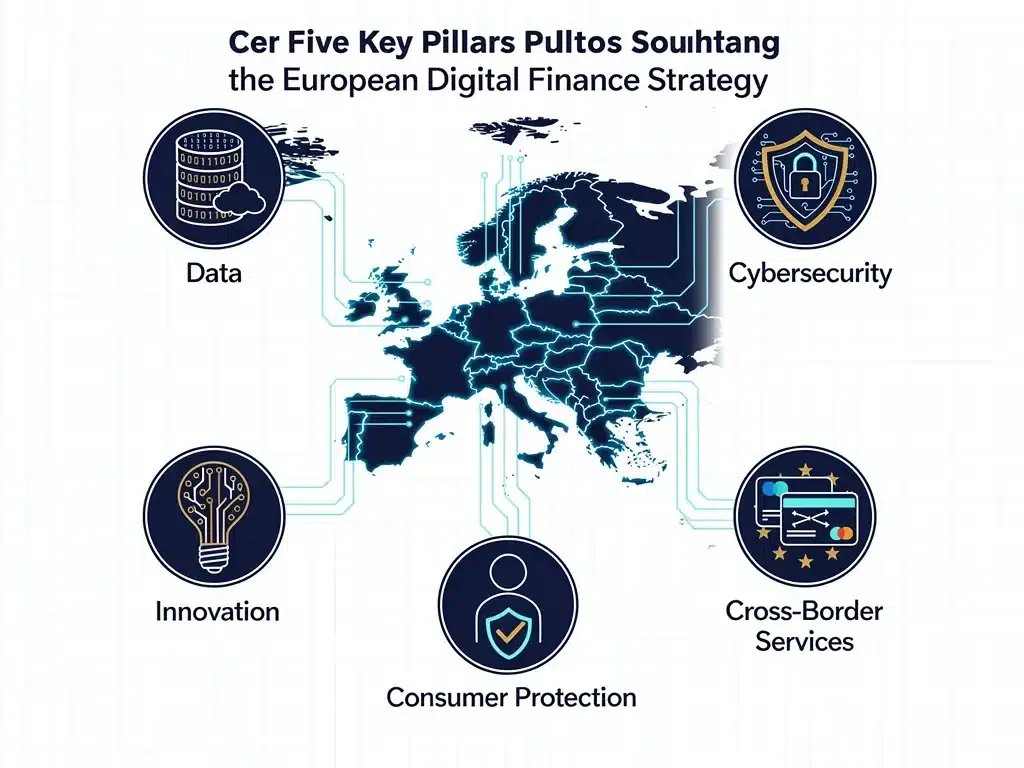
This strategic framework is built on four main pillars: addressing fragmentation in the digital single market, adapting EU financial services rules to the digital age, boosting innovation, and enhancing consumer protection and financial stability.
These pillars collectively form the backbone of the regulatory changes French consumers will encounter.
Ultimately, the strategy seeks to ensure that financial services remain resilient and accessible in the digital era, benefiting both businesses and individuals.
It emphasizes a technology-neutral approach, meaning regulations focus on the activity rather than the technology used, which fosters flexibility and future-proofing.
Key Change 1: Enhanced Consumer Protection in Digital Financial Services
One of the most significant aspects of the 2026 EU Digital Finance Strategy is the bolstering of consumer protection, especially in novel digital financial products and services.
This involves ensuring transparency, safeguarding personal data, and providing clear dispute resolution mechanisms.
French consumers will benefit from clearer information requirements for digital financial products, making it easier to compare offerings and understand associated risks. The aim is to prevent mis-selling and to empower individuals to make informed decisions in a complex digital environment.
New rules will also address issues like algorithmic bias and predatory practices, ensuring that financial technology serves consumers fairly. This focus on consumer rights is paramount as more financial interactions shift online, demanding robust safeguards against emerging threats.
Greater Transparency and Information Disclosure
The new regulations mandate that digital financial service providers offer comprehensive and easily understandable information about their products. This includes clear statements on fees, risks, and terms and conditions, presented in a standardized format.
For French consumers, this means less jargon and more accessible data, allowing for better decision-making when choosing digital banking, investment platforms, or payment services.
The goal is to level the playing field, ensuring that consumers have the necessary tools to evaluate digital offerings critically.
Strengthened Data Protection and Privacy
Under the enhanced framework, data protection will be a central concern, building upon existing GDPR principles but tailored for financial data. Consumers will have greater control over their financial data, with explicit consent required for its use and sharing.
This change is critical for French consumers engaging with FinTech services that rely heavily on personal data for personalized offerings. It aims to prevent unauthorized data breaches and misuse, fostering trust in digital financial ecosystems.
Key Change 2: Regulation of Crypto-Assets (MiCA) and its Impact
The Markets in Crypto-Assets (MiCA) regulation is a cornerstone of the EU Digital Finance Strategy, bringing comprehensive regulation to crypto-assets not already covered by existing financial services legislation.
This marks a pivotal moment for the crypto industry in France and across the EU.
MiCA will introduce clear rules for issuers of crypto-assets and service providers, covering aspects like authorization, operational requirements, and market abuse.
This framework aims to provide legal certainty, support innovation, and protect investors from the volatility and risks often associated with crypto markets.
For French consumers, this means increased security and reliability when dealing with cryptocurrencies, stablecoins, and associated services. It will help distinguish legitimate crypto offerings from fraudulent ones, making the digital asset space safer for participation.
The regulation will also standardize disclosures for crypto-assets, compelling issuers to publish white papers with detailed information about their projects and risks. This transparency is vital for French investors considering venturing into the crypto market.
Licensing and Supervision of Crypto Service Providers
Under MiCA, crypto-asset service providers (CASPs) will need to obtain authorization to operate within the EU, including France. This licensing requirement will subject them to regulatory oversight, ensuring they meet specific capital, governance, and conduct rules.
This measure is designed to bring a level of institutional rigor to the crypto market, similar to traditional financial institutions. It means French consumers can have greater confidence in the integrity and solvency of platforms offering crypto trading, custody, or exchange services.
Key Change 3: Digital Operational Resilience (DORA) for Financial Stability
The Digital Operational Resilience Act (DORA) is another critical component of the EU Digital Finance Strategy, focusing on strengthening the IT security of financial entities.
DORA aims to ensure that financial institutions can withstand, respond to, and recover from all types of ICT-related disruptions and threats.
This regulation will impose stringent requirements on financial entities regarding their information and communication technology (ICT) risk management, incident reporting, digital operational resilience testing, and third-party ICT risk management.
It recognizes the increasing interconnectedness of the financial system and the potential for systemic risks arising from cyberattacks or IT failures.
For French consumers, DORA translates into greater confidence in the continuous availability and security of their digital financial services.
It means that banks, payment providers, and other financial firms will be better equipped to protect against cyber threats and ensure uninterrupted service.
Robust ICT Risk Management Frameworks
DORA mandates that financial entities establish comprehensive ICT risk management frameworks. This includes identifying, classifying, and managing all ICT risks, from cybersecurity incidents to system failures.
These frameworks will ensure that French financial institutions proactively address potential vulnerabilities, minimizing the likelihood of service disruptions. Consumers can expect a higher standard of reliability and security for their online banking and financial transactions.
Enhanced Incident Reporting and Testing
The regulation also introduces harmonized rules for reporting major ICT-related incidents to relevant authorities. This will improve incident response coordination and allow for quicker remediation of issues.
Furthermore, DORA requires regular digital operational resilience testing, including advanced threat-led penetration testing for critical functions.
This proactive approach ensures that financial systems are robust and can withstand sophisticated cyberattacks, protecting French consumers’ assets and data.
Key Change 4: Open Finance Initiatives and Data Sharing
The EU Digital Finance Strategy is also pushing for ‘Open Finance’, an evolution of Open Banking that extends data sharing consent beyond payment accounts to a broader range of financial products.
This initiative aims to foster innovation and competition by allowing consumers to share their financial data securely with third-party providers.
Open Finance will enable the development of new, personalized financial services, offering French consumers more choice and potentially better deals.
This could include aggregated financial insights, tailored investment advice, and more efficient lending processes, all based on a comprehensive view of an individual’s financial situation.
While offering significant opportunities, Open Finance also emphasizes the importance of consumer consent and data security.
French consumers will retain full control over their data, deciding what information they share and with whom, ensuring privacy remains a top priority.
New Opportunities for Personalized Financial Services
With Open Finance, French consumers could see a proliferation of innovative financial tools and services.
Imagine an app that consolidates all your bank accounts, investments, and insurance policies, providing a holistic view of your financial health and offering personalized recommendations.
This could lead to more competitive pricing and services as FinTech companies leverage shared data to create more attractive offerings. The emphasis remains on providing value to the consumer through enhanced transparency and choice.
Strict Consent and Data Security Protocols
Despite the broader scope of data sharing, Open Finance will operate under stringent consent and data security protocols. Consumers will need to provide explicit consent for each instance of data sharing, with clear explanations of how their data will be used.
This ensures that French consumers are empowered to control their financial information, mitigating risks associated with data privacy. Robust security measures will also be in place to protect shared data from unauthorized access or breaches.
Key Change 5: Modernizing Payment Services (PSD3/PSR)
The modernization of payment services, through initiatives like the potential PSD3 (Payment Services Directive 3) and PSR (Payment Services Regulation), is another crucial aspect of the EU Digital Finance Strategy.
These updates aim to adapt payment rules to new technologies and business models, ensuring secure and efficient digital payments.
For French consumers, this means more secure, faster, and more convenient digital payment options. The revisions will likely address issues such as stronger customer authentication, combating payment fraud, and ensuring fair competition among payment service providers.
These changes are designed to keep pace with the rapid evolution of digital payments, from instant payments to mobile wallets, ensuring that the regulatory framework supports innovation while protecting users. The goal is a seamless and secure payment experience across the EU.
The updated framework will also focus on improving the interoperability of payment systems, making cross-border payments within the EU smoother and potentially cheaper. This benefits French consumers who engage in international e-commerce or travel frequently.
Enhanced Security for Digital Payments
The revised payment services framework will introduce stricter security requirements for digital payment transactions. This includes stronger customer authentication (SCA) measures to reduce fraud and enhance the safety of online purchases and transfers.
French consumers can expect more robust protection against unauthorized transactions and phishing scams. These measures are critical for building trust in digital payment methods and encouraging their wider adoption.
Promoting Innovation and Competition in Payments
The updated regulations will also aim to foster innovation and competition within the payment services sector. By creating a level playing field for traditional banks and new FinTech payment providers, the framework encourages the development of cutting-edge payment solutions.
This could lead to a wider array of payment options for French consumers, potentially including instant payment services that are available 24/7. The focus is on making payments more efficient, accessible, and user-friendly across the board.
| Key Change | Impact on French Consumers |
|---|---|
| Enhanced Consumer Protection | Clearer information, data privacy, and dispute resolution for digital financial products. |
| MiCA (Crypto-Assets) Regulation | Increased security and reliability for crypto investments and services. |
| DORA (Operational Resilience) | Greater confidence in the security and continuous availability of digital financial services. |
| Open Finance Initiatives | More personalized financial services and greater control over shared financial data. |
Frequently Asked Questions about the EU Digital Finance Strategy
What is the primary goal of the EU Digital Finance Strategy?▼The primary goal is to foster innovation, ensure financial stability, and enhance consumer protection across the European Union’s digital financial markets. It aims to create a more integrated and competitive financial landscape, benefiting both businesses and individual consumers through advanced digital solutions.
How will MiCA affect French consumers using cryptocurrencies?▼MiCA will bring increased security and reliability to crypto-asset markets for French consumers. It introduces clear rules for crypto issuers and service providers, mandating authorization and operational requirements, thereby protecting investors from fraud and market manipulation in the crypto space.
What does DORA mean for the security of my online banking?▼DORA (Digital Operational Resilience Act) means enhanced security for your online banking and digital financial services. It requires financial institutions to implement robust ICT risk management frameworks and conduct regular resilience testing, ensuring they can withstand and recover from cyber threats and IT disruptions effectively.
Will Open Finance allow third parties to access my financial data without consent?▼No, Open Finance will operate under strict consent and data security protocols. French consumers will retain full control over their financial data, needing to provide explicit consent for any data sharing with third-party providers, ensuring privacy and security remain paramount in this innovative framework.
When can French consumers expect these changes to be fully implemented?▼Most of the key changes under the 2026 EU Digital Finance Strategy are expected to be fully implemented by 2026. However, some aspects, like MiCA, have staggered implementation dates, with certain provisions already in effect. Consumers should stay informed about specific timelines for different regulations.
What this means
The ongoing development and implementation of the EU Digital Finance Strategy signify a transformative period for financial services in France and across the European Union.
These changes are not incremental; they represent a fundamental restructuring aimed at ensuring security, fostering innovation, and empowering consumers in the digital age.
For French consumers, staying informed about these five key changes is essential for navigating their financial future effectively.
The strategy aims to build a resilient and competitive digital financial ecosystem, ensuring that the benefits of technological advancements are realized while mitigating associated risks.
Continuous monitoring of official announcements and regulatory guidance will be crucial as these provisions come into full effect, shaping how individuals interact with their finances for years to come.