Matter 1.4 Architecture: Local Thread Border Routers & Cloud Freedom
Advertisements
Tired of smart home routines failing the second your internet drops or a cloud server goes dark? Upgrading your setup to local control is the ultimate solution for speed, privacy, and true reliability.
With the release of the Matter 1.4 Architecture, homeowners can finally bridge isolated smart ecosystems into a single, cohesive local mesh. By standardizing how local Thread border routers communicate over Wi-Fi and Ethernet, this framework removes structural bottlenecks and minimizes cloud dependence.
Achieving complete offline freedom doesn't require rebuilding your setup from scratch. Understanding how these network infrastructure updates handle device authentication and local traffic routing is all it takes to keep your home running seamlessly.
Understanding Matter 1.4 and Its Core Principles
The recent advancements in Matter 1.4 Architecture mark a significant pivot for the smart home industry, moving towards greater autonomy and user control. This latest iteration focuses heavily on refining the underlying network protocols and enhancing device compatibility across various ecosystems.
At its heart, Matter 1.4 aims to simplify the smart home experience by providing a unified standard, eliminating the fragmentation that has long plagued consumers. The emphasis on local control, particularly through Thread Border Routers, is a direct response to growing concerns about privacy, security, and reliance on internet connectivity.
This evolution is not merely incremental but represents a foundational shift in how smart devices communicate and operate within a home environment. The goal is to empower users with more robust, reliable, and private smart home systems, free from external server dependencies.
The Pivotal Role of Local Thread Border Routers
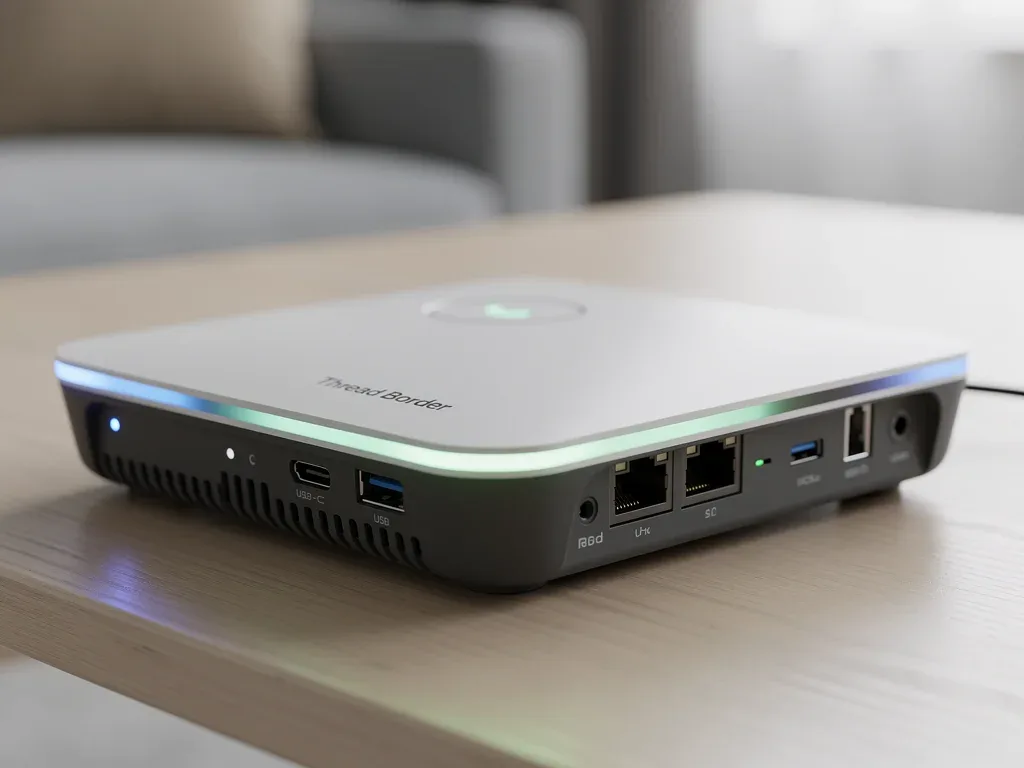
Matter 1.4 Architecture centers on the capabilities of Thread Border Routers, which act as critical bridges between a Thread network and other IP-based networks, such as Wi-Fi or Ethernet. These devices are fundamental to establishing a truly local smart home ecosystem.
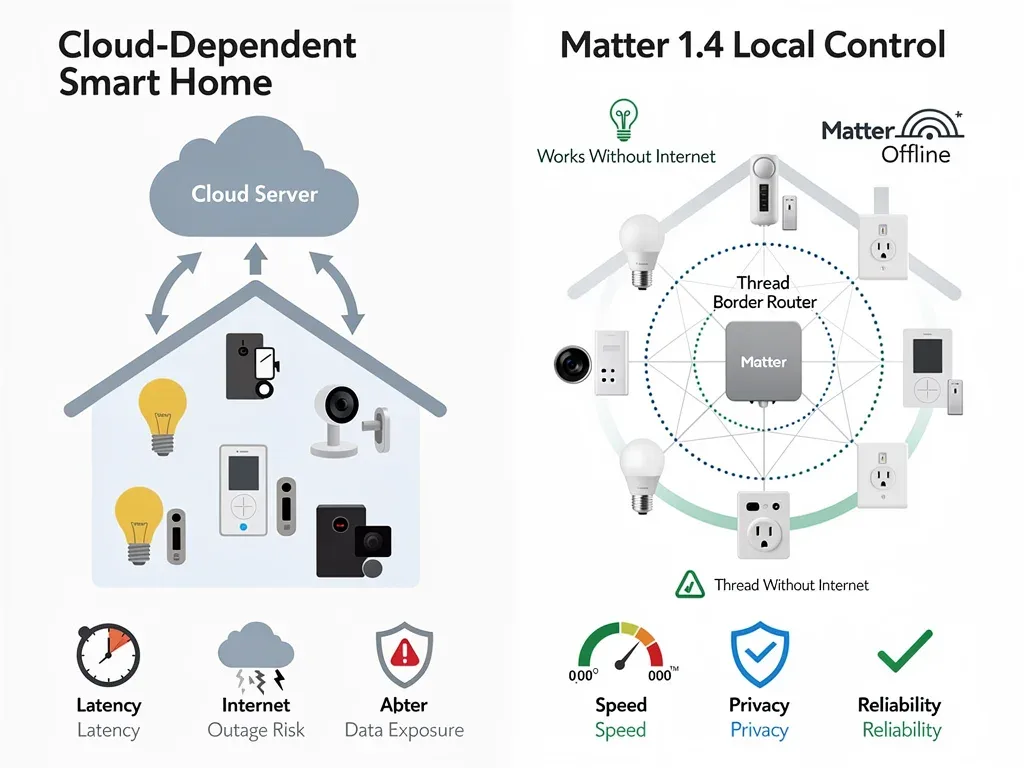
By enabling direct communication between Matter devices and the local network without routing through external cloud servers, Thread Border Routers drastically reduce latency and improve reliability. This local processing ensures that smart home functions remain operational even during internet outages, a critical feature for essential services.
The deployment of these routers is a strategic move to decentralize smart home control, giving users full ownership of their data and device interactions. This architectural choice reinforces the commitment to a more resilient and user-centric smart home future.
Decentralizing Smart Home Control
The concept of decentralization in smart homes, facilitated by local Thread Border Routers, means that critical commands and data exchanges occur entirely within the home network. This paradigm shift offers enhanced privacy, as sensitive user data no longer needs to traverse external cloud servers.
Furthermore, local control significantly boosts the responsiveness of smart devices, as commands do not suffer from internet delays or server processing bottlenecks. This directly translates to a smoother, more immediate user experience, from adjusting lights to managing thermostats.
Improved Data Privacy: User data remains within the local network.
Enhanced Security: Reduced exposure to external cyber threats.
Increased Reliability: Functions persist during internet outages.
Faster Response Times: Commands execute without cloud latency.
Technical Advantages of Thread Integration
Thread, as a low-power, mesh networking protocol, provides a robust and scalable foundation for Matter devices. Its self-healing mesh capabilities ensure that if one device goes offline, others can reroute communication, maintaining network integrity.
When integrated with Matter 1.4 Architecture, Thread allows devices to communicate efficiently and securely, consuming minimal power, which extends the battery life of many smart home gadgets. The combination of Thread's efficiency and Matter's interoperability creates a powerful, future-proof smart home standard.
This technical synergy is what enables the vision of Matter 1.4 Architecture to become a reality. It's a foundational element for a truly independent smart home.
Achieving 100% Cloud Dependency Removal
The ambitious goal of Matter 1.4 Architecture is not merely theoretical; it's being actively implemented through strategic design and deployment. This involves ensuring that all essential smart home functionalities can operate independently of any external cloud infrastructure.
Achieving complete cloud independence requires careful consideration of every aspect of device interaction, from initial setup and commissioning to daily operation and firmware updates. The architecture must support local authentication, local command processing, and local data storage.
This comprehensive approach ensures that users have full control over their smart home environment, safeguarding their privacy and ensuring consistent performance. The implications for data security and operational resilience are profound.
Implications for User Privacy and Data Security
The removal of cloud dependency directly addresses some of the most pressing concerns for smart home users: privacy and data security. By keeping data local, the risk of data breaches and unauthorized access from external servers is significantly mitigated.
Users gain greater assurance that their personal habits, energy consumption patterns, and home security data remain within their control. This shift empowers individuals to decide how and when their data is shared, rather than relying on third-party cloud providers.
This focus on local data management is a cornerstone of Matter 1.4's appeal, building trust and offering a compelling alternative to traditional cloud-centric smart home models. It's a proactive step towards a more secure digital living space.
Enhanced Reliability During Internet Outages
One of the most immediate and tangible benefits of removing cloud dependency is the uninterrupted operation of smart home devices during internet outages. In a cloud-dependent system, even basic functions can cease to work when the internet connection is lost.
With Matter 1.4 Architecture, critical functions such as lighting control, thermostat adjustments, and security system monitoring continue to operate seamlessly. This provides a level of reliability previously unattainable in many smart home setups.
This resilience is particularly important for essential services and ensures that a temporary internet disruption does not render a smart home inoperable. It represents a significant improvement in the practical utility of smart home technology.
Challenges and Solutions in Local Deployment
While the benefits of Matter 1.4 Architecture are clear, the deployment of such systems is not without its challenges. Ensuring seamless integration of diverse devices and managing network complexities locally requires robust solutions.
One key challenge involves the initial setup and commissioning of devices in a purely local environment, which needs to be intuitive for the average user. Developers are actively working on streamlined processes and user-friendly interfaces to simplify this critical first step.
Another area of focus is the ongoing management and maintenance of local networks, including firmware updates and troubleshooting. Solutions are emerging that leverage local network capabilities for these tasks, minimizing the need for cloud intervention.
Simplifying Device Commissioning and Management
The process of adding new devices to a Matter network, known as commissioning, is being refined to be as straightforward as possible, even without cloud assistance. QR code scanning and Bluetooth Low Energy (BLE) are key technologies facilitating this local setup.
Once commissioned, managing devices through a central local hub or a smartphone app connected to the local network allows for easy control and configuration. This local management ensures that users retain full oversight without their data leaving the home.
This simplified approach is crucial for widespread adoption, as complex setup procedures have historically been a barrier for many consumers. Matter 1.4 aims to make local control accessible to all.
QR Code Pairing: Quick and secure device addition.
BLE for Setup: Initial local connection for commissioning.
Local Hub Control: Centralized management within the home.
Intuitive Interfaces: User-friendly apps for device interaction.
Ensuring Seamless Local Firmware Updates
Firmware updates are essential for device security and functionality, and ensuring these can occur locally is a critical component of cloud independence. Matter 1.4 is addressing this by enabling devices to fetch updates directly from local sources or designated network devices.
This means that manufacturers can provide updates that are delivered to the local Thread Border Router or a smart home hub, which then distributes them to the connected Matter devices. This process bypasses the need for devices to constantly connect to external cloud servers for updates.
The ability to manage firmware updates locally not only enhances privacy but also ensures that devices remain secure and up-to-date, even in environments with limited or no internet access. It’s a testament to the robust design of Matter 1.4 Architecture.
Matter 1.4 Architecture: Industry Adoption and Future Outlook
The industry response to Matter 1.4 Architecture has been overwhelmingly positive, with major players in the smart home sector actively integrating the standard into their product roadmaps. This widespread adoption is crucial for establishing Matter as the dominant interoperability standard.
Manufacturers are releasing new devices with Matter 1.4 support, ranging from lighting and thermostats to sensors and security systems. This growing ecosystem provides consumers with a broader choice of compatible products that can operate seamlessly together.
Looking ahead, the continued evolution of Matter, particularly its focus on local control, is expected to drive innovation in smart home technology, fostering a new era of secure, private, and reliable connected living. The momentum is clearly building towards a cloud-free smart home future.
Key Manufacturers Embracing Local Control
Leading technology companies, including Apple, Google, Amazon, and Samsung, are all actively supporting Matter 1.4 and its local control capabilities. Their commitment is accelerating the development and availability of compatible devices.
These companies are integrating Thread Border Router functionality into their existing smart hubs and Wi-Fi routers, making it easier for consumers to build cloud-independent smart home networks. This cross-platform support ensures broad compatibility.
The collective effort from these industry giants underscores the importance of local control as a foundational element for the next generation of smart home technology. It signals a unified vision for a more robust and private smart home experience.
The Long-Term Vision for Cloud-Free Smart Homes
The long-term vision for cloud-free smart homes, powered by Matter 1.4 Architecture, extends beyond mere device interoperability. It encompasses a future where smart homes are truly autonomous, secure, and resilient.
This vision includes advanced local automation, where complex routines and scenes can execute without any external dependencies, offering unparalleled customization and responsiveness. The potential for innovation in this space is immense, driven by local processing capabilities.
Ultimately, the goal is to create smart homes that are not just convenient but also empowering, giving users complete control over their digital environments and fostering a greater sense of trust in connected technologies. This represents a significant leap forward for the industry.
Key Aspect | Description |
|---|---|
Local Control | Smart devices operate entirely within the home network. |
Cloud Independence | Eliminates reliance on external cloud servers for functionality. |
Thread Border Routers | Gateways connecting Thread devices to Wi-Fi/Ethernet for local IP access. |
Enhanced Privacy | User data remains within the local network, increasing security. |
Frequently Asked Questions About Matter 1.4 Architecture
What is the primary benefit of Matter 1.4's local control?▼
The primary benefit of Matter 1.4's local control is the significant enhancement of privacy and security. By keeping all device communications and data processing within the local network, it drastically reduces exposure to external cloud vulnerabilities and third-party data collection.
How do Thread Border Routers enable cloud independence?▼
Thread Border Routers act as a bridge, allowing Thread-enabled Matter devices to communicate directly with other IP-based devices on the local network. This bypasses the need for data to travel to and from external cloud servers, ensuring operations continue even without internet access.
Will my existing smart home devices be compatible with Matter 1.4 local control?▼
Compatibility depends on whether your existing devices receive firmware updates to support Matter 1.4 and Thread. Many newer smart home hubs and devices are designed to be upgradeable, but older devices may require replacement to fully leverage the cloud-independent features.
What are the security advantages of removing cloud dependency?▼
Removing cloud dependency significantly reduces the attack surface for cyber threats. With data staying local, there are fewer external points for potential breaches, enhancing the overall security posture of your smart home and protecting sensitive personal information.
Is Matter 1.4 Architecture ready for widespread adoption now?▼
Matter 1.4 is rapidly gaining traction with broad industry support and an increasing number of compatible devices hitting the market. While the ecosystem is still evolving, it is becoming increasingly robust and ready for mainstream adoption, especially for users prioritizing local control.
Looking Ahead
The introduction of Matter 1.4 Architecture signals a pivotal moment for smart home technology. This architectural shift prioritizes user autonomy, privacy, and system reliability, moving away from cloud-centric models that have raised concerns.
As the smart home market continues to mature, the emphasis on local control is expected to drive further innovation in device capabilities and network resilience. Consumers should monitor new product releases and firmware updates that align with Matter 1.4, as these will define the next generation of truly independent smart homes.
The trajectory set by Matter 1.4 suggests a future where smart homes are not only interconnected but also inherently more secure and responsive, offering a robust foundation for advanced home automation without external reliance.